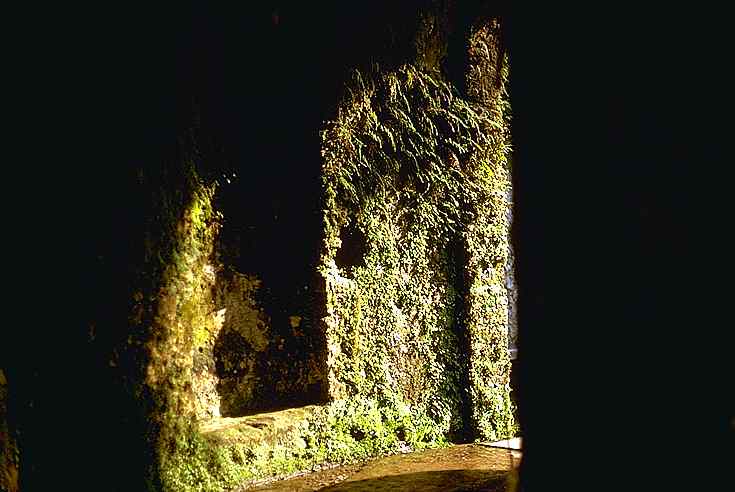
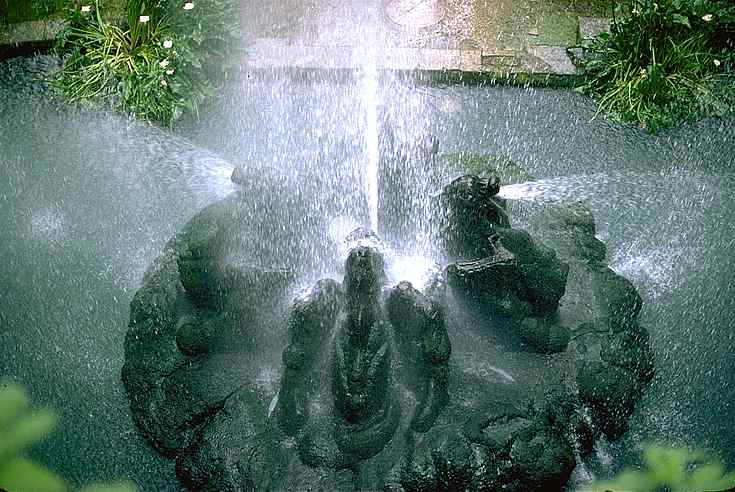
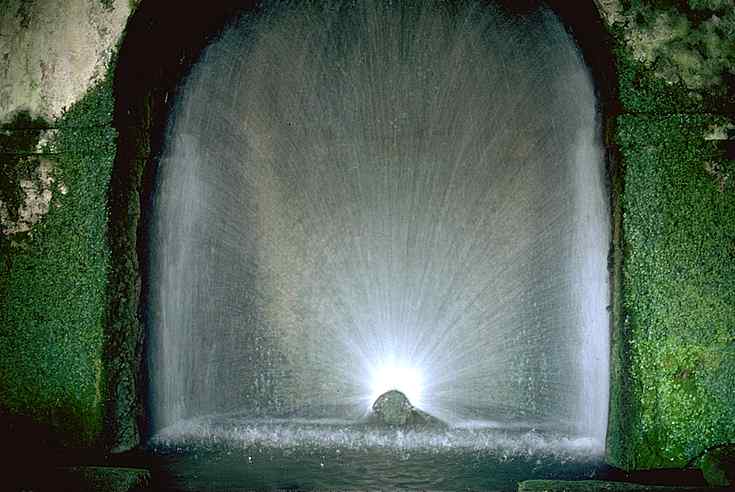
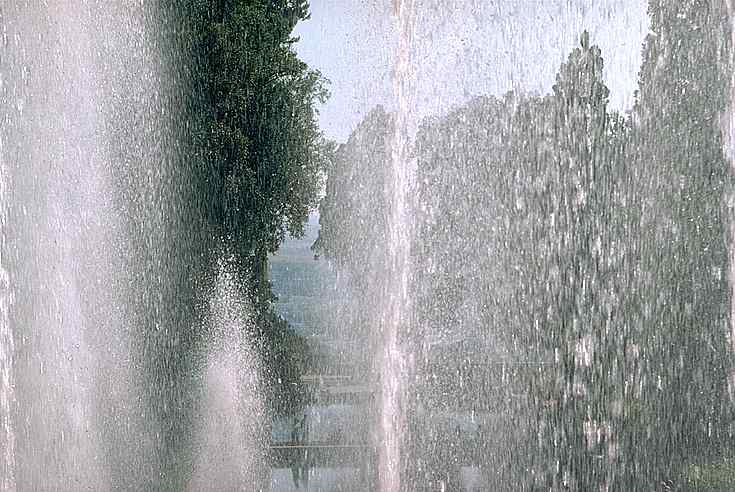
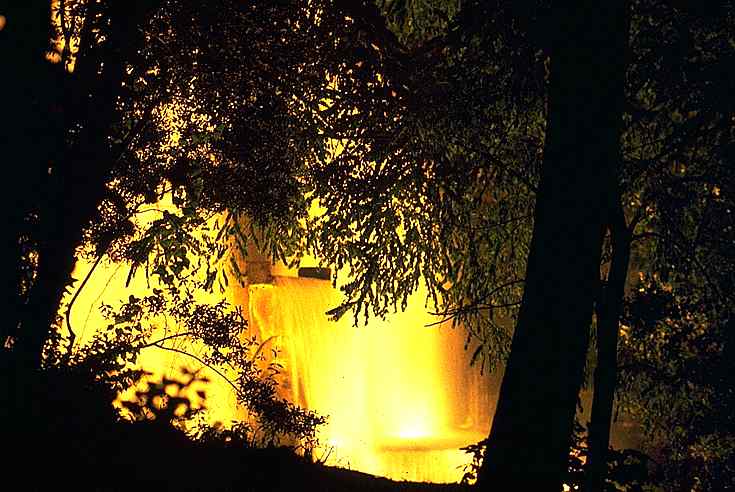
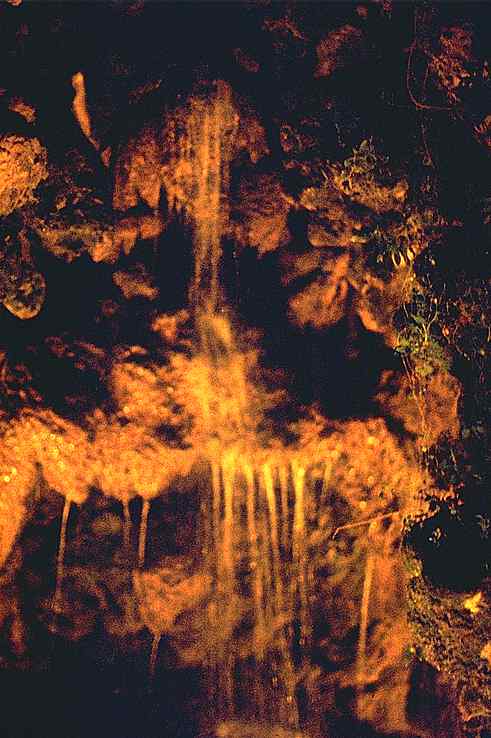
Je ne citerais que le jardin d'Eden qui, après tout, est le lieu dans lequel l'homme est né. Il préexistait à l'invention d'Adam et Eve. On parle des jardins de Sémiramis, des fameux jardins suspendus de Babylone.
Un jardin égyptien pharaonique a laissé des traces. C'est celui qu'avait dessiné le pharaon Toutmosis III dans l'enceinte même du temple de Karnak. Plus près de nous encore, on connaît dans la littérature, les splendeurs des jardins des mécènes de Tivoli, contemporains de l'empereur Néron. Ces jardins étaient considérés, au point de vue du goût, comme ce que l'on pouvait imaginer de plus grand, de plus beau, de plus noble. Ce qui fait que l'empereur Néron, jaloux, s'en était fait dessiner de plus beaux encore. Ils ornaient la Domus Aurea. Ils se situent sous le parking du Colisée aujourd'hui.
Vous avez probablement entendu parler des jardins que l'impératrice Théodora avait fait dessiner pour son époux Justinien, à Byzance. Les jardins des monastères de nos grands 12e, 13e et 14e siècles étaient le lieu de séjour privilègié de la Vierge. Sous le nom de Ortus Conclusus, le jardin fermé abritait le miracle même de l'incarnation. Plus près encore, les jardins de Versailles, Schönbrun, Charlottenburg, Nüfenburg, marquent les grands moments de l'art du jardin. Vous l'avez remarqué, je n'ai parlé que des jardins occidentaux. J'omets ceux de la Chine, du Japon, de l'Inde moghole.
Partout où l'homme est homme, il se prend du besoin de redessiner, de recréer le monde. Un monde plus beau, plus pur, plus parfumé, plus coloré. Le jardin est probablement le lieu où s'appréhendent le mieux les espoirs d'une civilisation.
En fait l'homme se définit par son jardin. La destination d'un jardin change de lieu en lieu, de civilisation en civilisation.
- Il y a des jardins pour cultiver les fleurs. Ce sont les nôtres. Celui de Candide de Voltaire aussi.
- Ce sont les parcs. Versailles en est un bel exemple.
- Il y a les jardins pour chasser. Dans les alentours de Naples, ne manquez pas d'aller voir le palais royal de Caserte, dont le parc fabuleux fut un lieu de chasse principalement.
- Il y a des jardins pour méditer. C'est le cas de la plupart des jardins japonais; jardins de monastères Zen.
- Il y a des jardins à contempler comme des œuvres d'art. C'est le cas des jardins de la Chine classique, notamment ceux de Sou Tchao.
Il y a bien longtemps, depuis l'historien Burckhart, on parle de Renaissance. Aujourd'hui, en un moment où tous les vieux concepts sont repris et revus, les historiens d'art admettent, et à juste titre, que le terme même de Renaissance est à redéfinir.
La Re-naissance, son nom l'indique, était une nouvelle naissance. Pendant longtemps, pour nous, la Renaissance a été un moment où des hommes se sont pris à rêver d'un temps révolu de mille cinq cents ans à peu près. Au 19e siècle, et encore pour beaucoup d'habitants du 20e, la Renaissance est une nostalgie, une fuite en arrière, des moments où l'on rêve d'être un peu athénien, un peu romain à l'époque de la République et des Césars. Alors est venue une nouvelle interprétation du concept: Ce sont des gens qui ont fabuleusement élargi l'horizon de leur culture, par des découvertes extraordinaires, que ce soient les découvertes géographiques que chacun connaît, ou les découvertes scientifiques. Ils se sont réfugiés dans ces découvertes, qui sont devenues le nouveau cadre du monde, de l'existence. Ce n'est plus une fuite en arrière, mais une fuite en avant, c'est-à-dire, ne pas accepter son temps. Les deux définitions de la Renaissance jusqu'ici admises, le retour en arrière et l'imitation de l'antiquité, ou, au contraire, la fuite en avant et cette futurologie appliquée, sont des définitions trop limitatives. Il faut les garder, l'une dans l'oeil gauche, l'autre dans l'oeil droit, pour adopter une troisième définition que je vous propose.
La Renaissance est un moment privilégié où une meilleure connaissance du passé d'une part et un intérêt forcené pour aujourd'hui et demain d'autre part, a permis à une société de rêver que l'homme pouvait devenir un génie. L'état de Renaissance, je l'appellerais un état de dépassement. Un moment où toute une société a cru et mis toutes ses forces vives et toute sa foi dans cette capacité que possède l'homme à être meilleur.
État de dépassement qu'est l'état du rêve, qu'est donc l'état d'Utopie.
Dépassement au niveau de l'homme. L'homme doit être, et cela aussi bien un Marsille Ficin, qu'un Pic de la Mirandole, qu'un Policien l'ont dit : l'homme doit être l'âme pure, l'âme transparente, haute, élevée, etservie par un corps qui soit pur et sain. Non seulement l'homme doit s'améliorer, devenir une sorte de héros, mais la société, c'est-à-dire la constitution de ces hommes-héros, doit devenir une sur-société. Qu'elle soit harmonieuse, équilibrée et surtout, qu'elle soit consciente de ses responsabilités.
Une œuvre d'art emblématise admirablement cette société utopique des 15e et 16e siècles: L'École d'Athènes

 Il s'agit, pour Raphaël, de montrer les voies de la Connaissance. Au centre de la composition, deux personnages. Un, lève le doigt vers le ciel, Platon, qui tient à la main le Timée, un de ses derniers dialogues. L'autre, baisse la main vers la terre, Aristote, qui tient à la main l'Ethique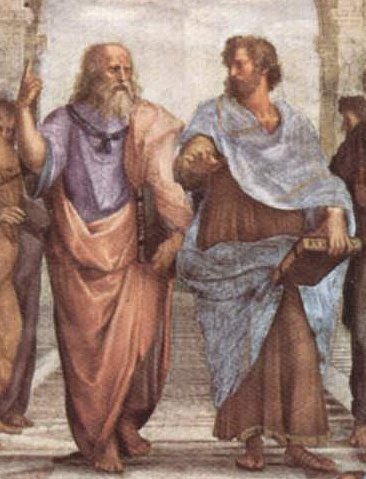
Ils représentent deux chemins, deux démarches : celui qui va de la réalité à l'idée, Platon, c'est-à-dire de la terre à l'idéal philosophique, et l'autre, Aristote, montre l'idéal philosophique qui ne peut exister que dans son illustration d'ici-bas. La transcendance et l'immanence sont représentées au travers de ces deux personnages. Autour d'eux, Raphaël a regroupé tous les grands savants de tous les temps. Surtout ceux de l'Antiquité, en leur prêtant les visages de certains de ses contemporains.
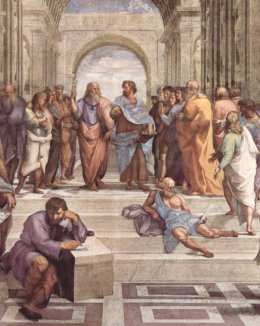
Sans entrer dans les détails, voyons quelques personnages importants. Héraclite., Diogène, négligeant de tout, négligé en tout. Socrate, parfaitement reconnaissable à son visage de satyre, entouré d'Alexandre le Grand, d'Alcibiade et d'autre disciples. Euclide, sous les traits de Bramante, faisant une démonstration mathématique accompagné par Zoroastre, celui qui a maîtrisé la connaissance du ciel et par Ptolémée, celui qui a maîtrisé la connaissance de la terre. A gauche, Averroès, reconnaissable à son turban blanc, qui a ouvert notre monde aux connaissances orientales. Epicure le teint fleuri et couronné de pampres.Chacun d'entre eux forme une encyclopédie des savoirs dans lesquels Raphaël ne s'est pas oublié. Il est à l'extrême droite, portant un habit noir, accompagné d'un jeune homme vêtu de blanc, le peintre Sodoma. Raphaël rend hommage à Michel-Ange et à Léonard de Vinci en leur donnant les traits d'Héraclite et de Platon.
La partie la plus magistrale est l'architecture du haut du tableau, qui doit tout à Bramante. Ce sont exactement ces caissons-là que Bramante élevaient dans la nouvelle Basilique Saint-Pierre qui voyait le jour.
Cela devait être phénoménal d'avoir comme voisin presque immédiat, Michel-Ange qui peignait la Sixtine, Bramante qui élevait les coupoles et les colonnades, et Léonard de Vinci se promenant dans les couloirs à la recherche de travail. Jules II a eu beaucoup de chance.
Son père, Giovanni di Santa di Pietro est peintre. Tout petit, Raphaël se familiarise avec les pigments, la colle, le liant, l'oeuf. A 11 ans, il est orphelin et déjà génial. Nous le retrouvons à Pérouse, dans l'atelier du peintre "Le Pérugin", chez qui, il poursuit sa formation. En 1504, Raphaël est à Florence. Il peint son premier chef-d'œuvre: la merveilleuse Déposition Palleoni (galerie Borghèse). Il est désormais célèbre. Son compatriote Bramante l'appelle à Rome. Nous sommes en 1508. Les années passées à Rome sont les années de la grande maturité de Raphaël.
Les papes Jules II et Léon X lui firent accomplir une œuvre immense ; le premier lui confia la décoration des 4 Stances ou chambres du Vatican; le second, celle des Loges. Les grands personnages du temps le sollicitent également : c'est ainsi qu'en 1514, il décora pour le banquier Chigi sa villa de la Farnésine (fresques de Galatée). A la mort de Bramante, il devient architecte de Saint-Pierre et directeur des grands travaux de Rome. Il n'en continua pas moins à peindre fresques, tableaux et portraits.
Comblé d'honneurs, de faveurs, il jouit d'une immense popularité.Il mérita le qualificatif de "divin" qu'on lui donna. Il meurt d'un accès de fièvre paludéenne à 37 ans.
Pour mettre en plan cette notion visionnaire et utopique d'une société, l'homme de la Renaissance a installé, tout d'abord une sorte de géométrie sociale. L'homme du 15e puis du 16e siècle va imaginer un triangle idéal
Le premier personnage est le propriétaire, le mécène. Celui-là possède le pouvoir social, politique, économique. De lui dépend la grandeur, la beauté, la complexité du jardin et des merveilles que l'on va y placer.
Le second personnage est ce que l'on appelle, à l'époque, l'ingénieur. Aujourd'hui nous l'appellerions le dessinateur - paysagiste. Il est celui qui va traduire ce que veut le mécène en adaptant son budget à celui du mécène. Il doit tout faire. Créer ou raser une colline. Il doit terrasser de façon à supporter de gigantesques statues, des grottes artificielles. Il doit trouver la pierre pour tailler les statues, trouver la pierre pour construire les grottes. Il a la responsabilité du travail pratique. Le travail d'un ingénieur est terrifiant. Il commence sa carrière pour un cardinal romain. Il la terminera peut-être pour un grand duc de Toscane ; mais, de toute façon, ce qu'il aura fait pour le grand duc de Toscane doit éclipser à tout jamais ce qu'il avait fait pour le cardinal romain. C'est la fuite en avant du " toujours mieux," qui est très important à la Renaissance. Une émulation extraordinaire pour surprendre, stupéfier, ravir, émerveiller.
Le troisième personnage est le personnage clé: l'humaniste. C'est le savant, l'érudit, l'homme de lettres, l'homme de sciences qui va concevoir le jardin. L'humaniste va créer le programme, la scénologie du jardin.
Le metteur en scène de jardin est un poste qu'ont occupé des personnages extraordinaires. Policien, le plus fameux humaniste et chercheur de son temps, ne dédaigne pas de créer des jardins pour les Médicis. Léonard de Vinci en a créés. Andrea Mantegna, à Mantoue, également.
Création sur le plan d'une philosophie de l'esprit et des formes sans laquelle un jardin, à cette époque, n'existerait pas.
Un jardin est le lieu privilégié, dans lequel, trois êtres doivent s'immortaliser;
- Le Prince Mécène.
- L'artiste, qu'il soit ingénieur, urbaniste, graveur, peintre, sculpteur ou dessinateur, qui doit se dépasser lui-même.
- L'humaniste qui crée un programme dont la cohérence est absolue.
Botticelli, Ange Policien, Jean Pic de la Mirandole et Marsile Ficin avaient l'habitude de se réunir dans les villas médicéennes, d'y suivre leur mécène, Laurent le Magnifique, et d'en partager les méditations.L'itinéraire tracé jadis dans le " Combat en Songe par amour de la Sagesse" s'ébauche au gré des promenades. Les idées de " Poliphile "
Vous entriez vierge dans un jardin, vous deviez en sortir initié. A chaque jardin correspond son initiation. Voilà le but des jardins de la Renaissance.
Pour illustrer ce texte, j'ai choisi deux œuvres d'art. Le dernier panneau de La Licorne.
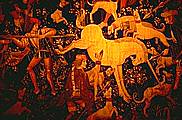
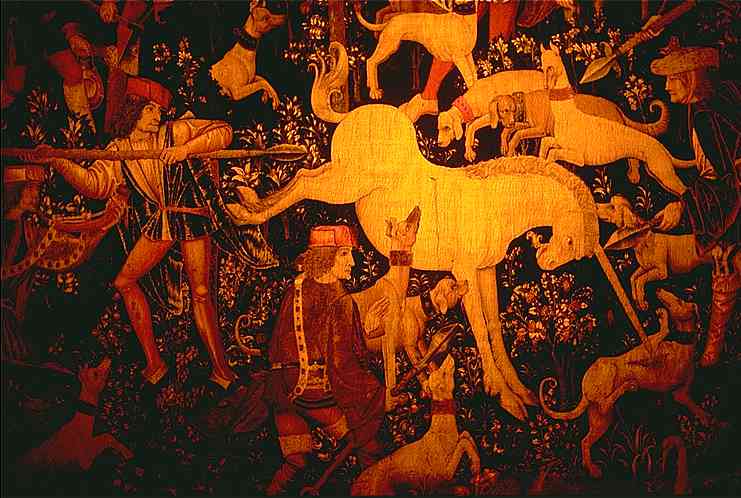
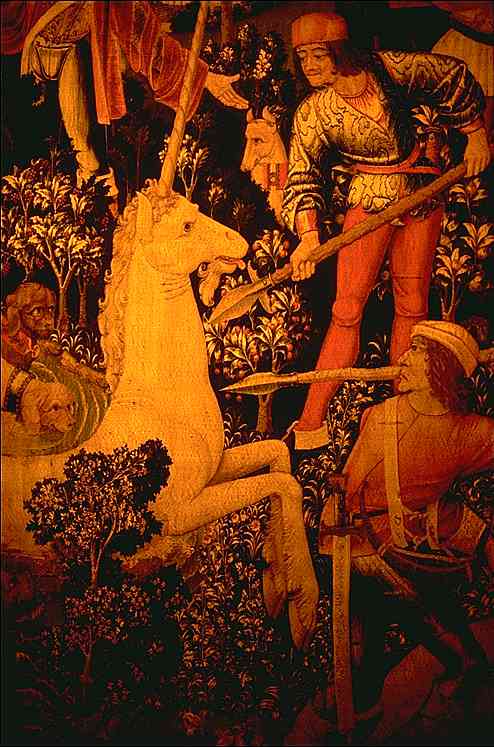
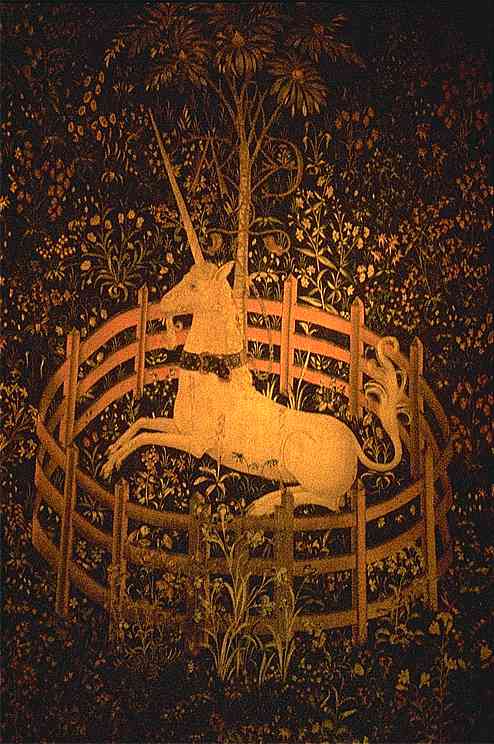
L'artiste a mis en scène la captivité de la Licorne : un enclos fermé, semé de fleurs, animé d'arbres, autrement dit, un jardin. Elle emblématise tout ce que je vous ai raconté, c'est-à-dire que le jardin est le lieu qui contient le symbole ou mieux, les symboles. Un lieu dont la portée symbolique, la portée d'enseignement, pour ne pas dire la portée initiatique est immense, très forte, très présente. Le jardin contient la Licorne. Voilà le but des jardins de la Renaissance.
Parmi ces Médicis, certains sont très connus : Cosme l'Ancien, Laurent le Magnifique mais aussi Lorenzo Di Pia Francesco qui a été l'un des plus grands mécènes de Florence, au 15e siècle.Il a à son service un peintre merveilleux :Sandro Botticelli. Botticelli s'est fait dicter un programme philosophico, hermetico, magico, généalogico, héroüque, par un humaniste nommé POLICIEN, sous forme d'un grand chant. Ce grand chant est devenu un double tableau qui, aujourd'hui encore, est parmi les plus connus au monde.
La Naissance de Vénus et la fameuse Primavera, sont l'exact produit de cette géométrie idéale.

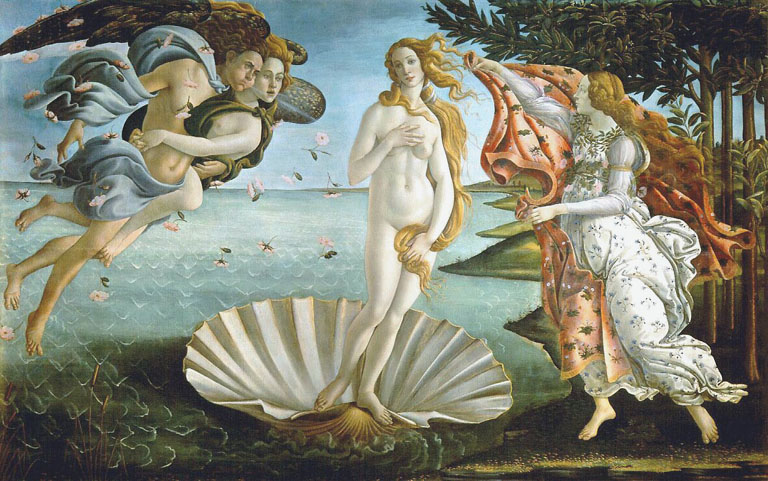
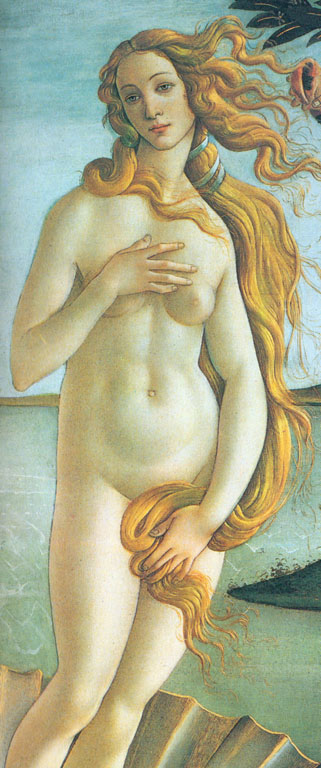
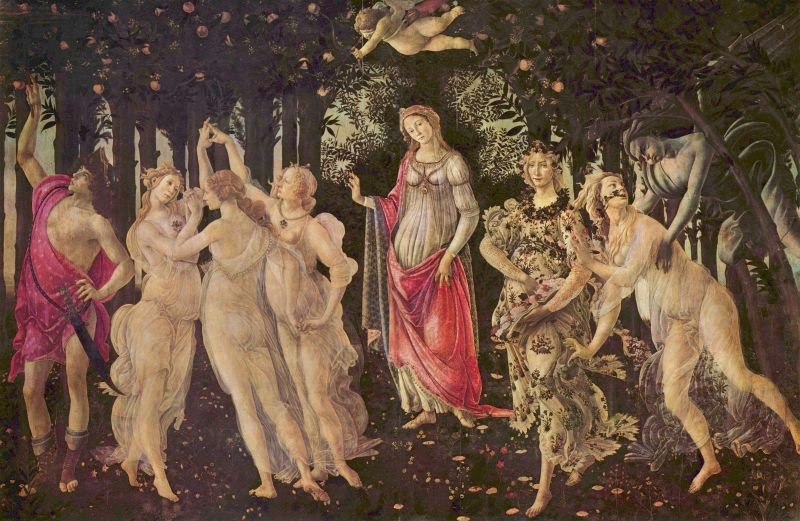
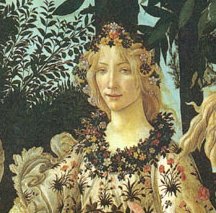
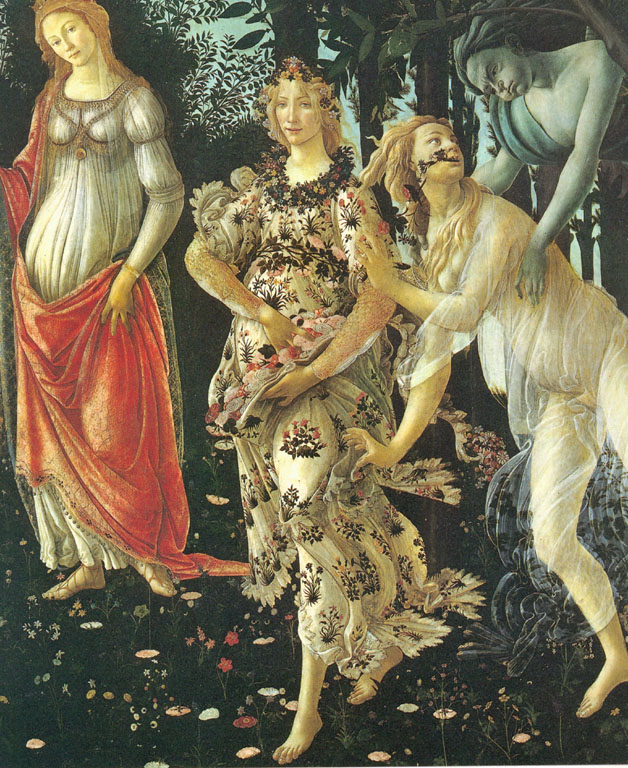
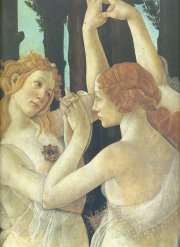
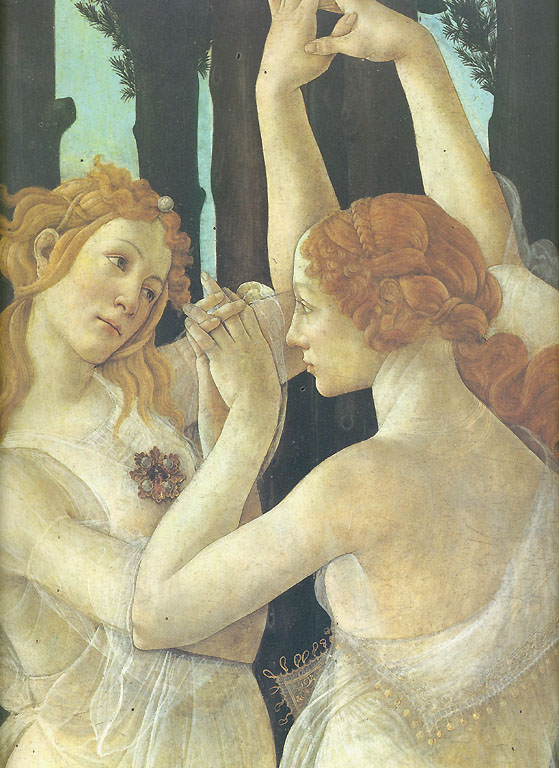
La Florence des Médicis est un exemple privilégié de ce fameux triangle, mais toutes les villes de l'Italie du 15e siècle ont bénéficié du même statut.
- Ferrare, avec la famille d'Este,
- Milan avec la famille Sforza,
- Urbin avec les fameux Montefeltre,
- Mantoue avec la famille des Gonzagues,
- Rome avec les Papes.
Très jeune, il a été voué à la peinture. Après deux premiers maîtres médiocres, il rencontre Pontormo.. Avec un tel maître, il découvre son propre langage, affine son regard, parfait sa technique. Il est intéressant de savoir que Vasari est également l'élève de Pontormo. La vie de Bronzino par Vasari est l'une des plus justes et des plus fiables qui soit. En 1526, il exécute sa première oeuvre, seul: les quatre tondi de l'église Santa Félicita, à Florence. En 1539, Florence prépare le mariage du Duc Cosme 1er de Médicis et Eléonore de Tolède. On commande à Bronzino quatre bas-reliefs de bronze, peints en trompe-l'oeil. Cette œuvre est d'une telle virtuosité que les époux sont immédiatement séduits et ils nomment Bronzino peintre officiel de la dynastie des Médicis.
Il est célèbre, tout Florence le demande. Sa pénétration psychologique, froide et rigoureuse, sensible et aiguë du modèle, alliée à une technique parfaite, vont nous donner les plus beaux portraits maniéristes
Renaissance
 Piero della Francesca (Sansepolcro 1415/20-1492) - Vierge à l'Enfant - Urbino -
 Maniérisme
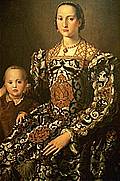 Bronzino (Florence 1503-1572) Eléonore de Tolède - Détroit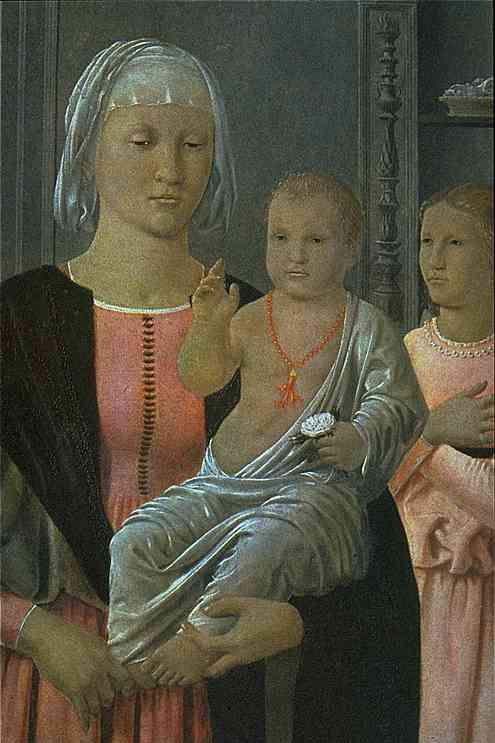
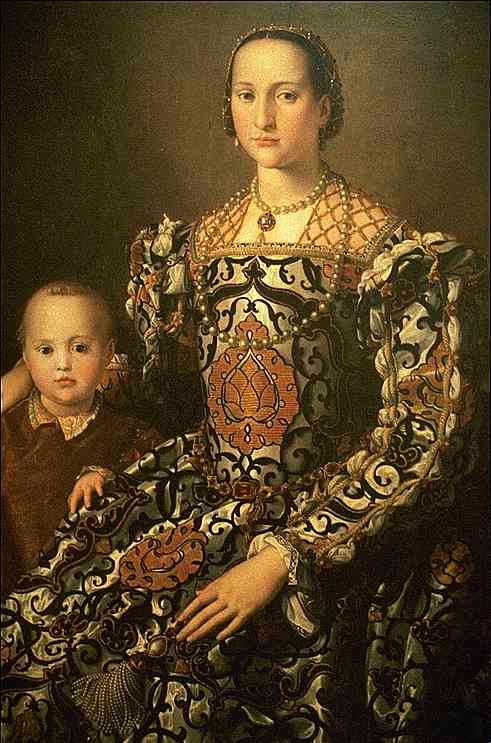 Portrait d'Eléonore de Tolède
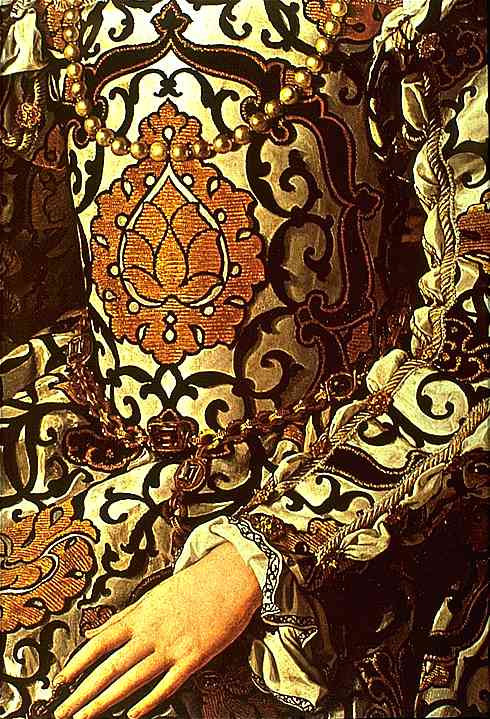
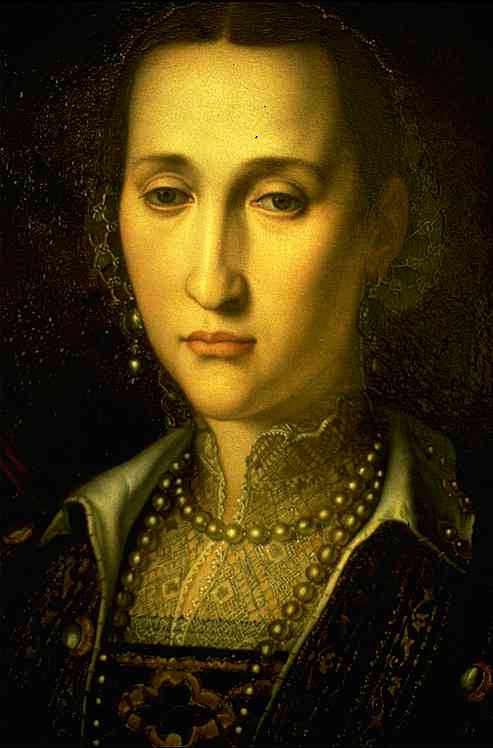 Elle s'imaginait sans cesse morte et voulait se faire peindre, en morte, dans son cercueil. Elle meurt de fièvre, comme beaucoup de Médicis, avant d'atteindre ses quaranteans. Chose extraordinaire, en 1982, vingt ans après qu'A. Chastel ait dit cela, Florence a ouvert les tombeaux des Médicis et a eu la stupéfaction de découvrir qu'Eléonore de Tolède a été enterrée avec cette robe-là. Dans un état fabuleux de conservation, on a retrouvé son corps embaumé, sa robe, sa chaîne autour de la taille. L'incroyable collier de perles n'est pas là. Ce sont les fameuses perles Médicis qui seront portées plus tard par toutes les dames qui mourront mal, dont Marie-Antoinette. Ce sont les perles maudites...
 Piero della Francesca - Adoration du bois de la Croix(détail) - Arezzo
Bronzino - Eléonore de Tolède - Berlin - Staatliche Museen
Piero della Francesca - Adoration du bois de la Croix(détail) - Arezzo
Bronzino - Eléonore de Tolède - Berlin - Staatliche Museen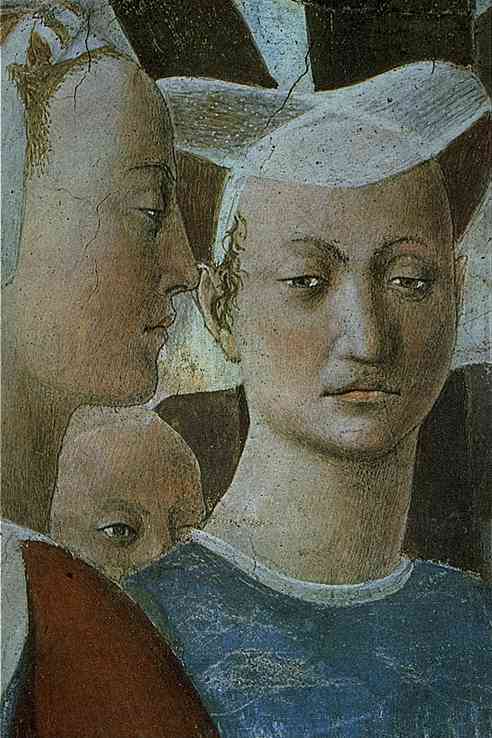
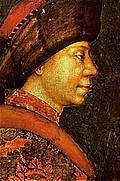 Pisanello (Pise v.1380-Mantoue av.1455) - Portrait d'un inconnu - Gêne Palazzo Rosso
 Bronzino - Cosme Ier de Médicis - Musée des Offices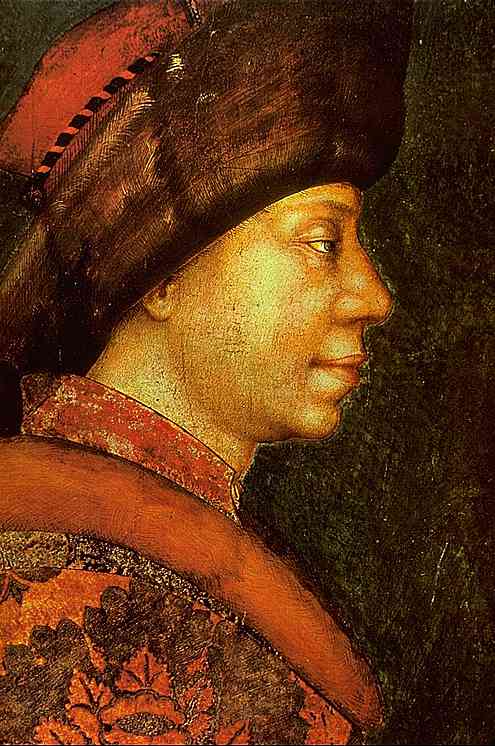
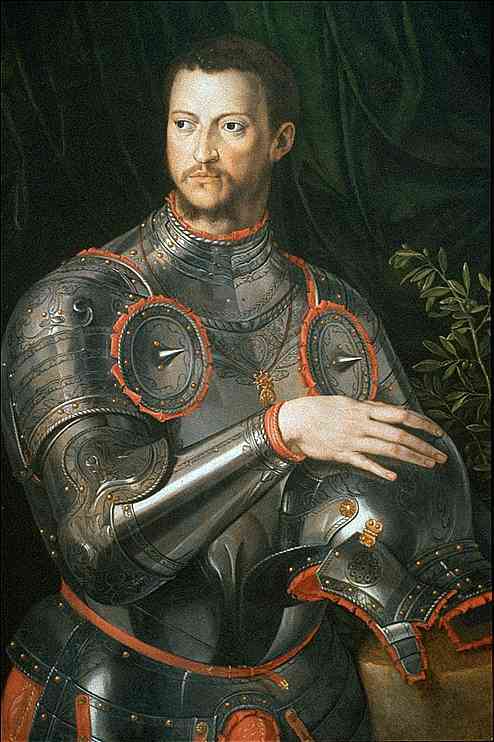
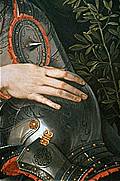
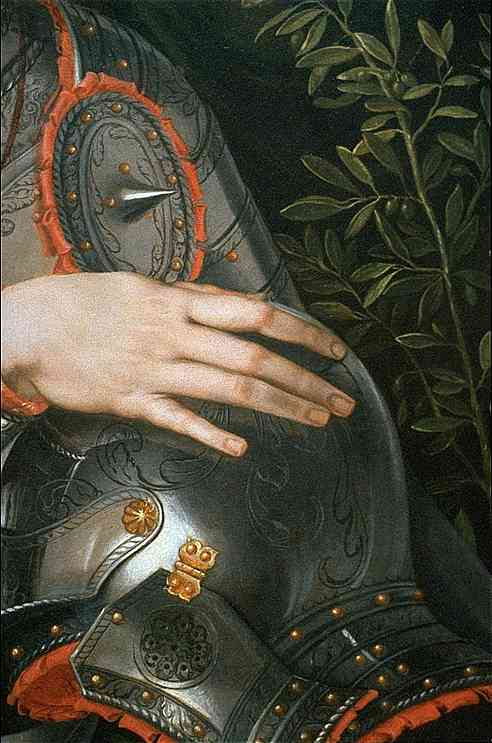
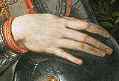
C'est un portrait incroyable. Regardons-le en détail. L'épaule, la charnière du coude. Il réussit à rendre le flou de la ciselure sous le coude, dû à l'usure du métal et surtout, en contraste, la main complètement féminine mais qui montre ou qui trahit la nature profonde de Cosme, qui était un être d'incroyables colères, d'incroyable volonté et absolutisme et, de temps en temps, de lâchetés monstrueuses, de dissimulations proches de l'animal. Bronzino trahit la nature secrète du modèle, ne serait-ce que dans cette main posée sur de l'acier.
 Masaccio (Florence - San Giovanni Valdarno 1402 - Rome 1428) - The Madonna with St. Anne
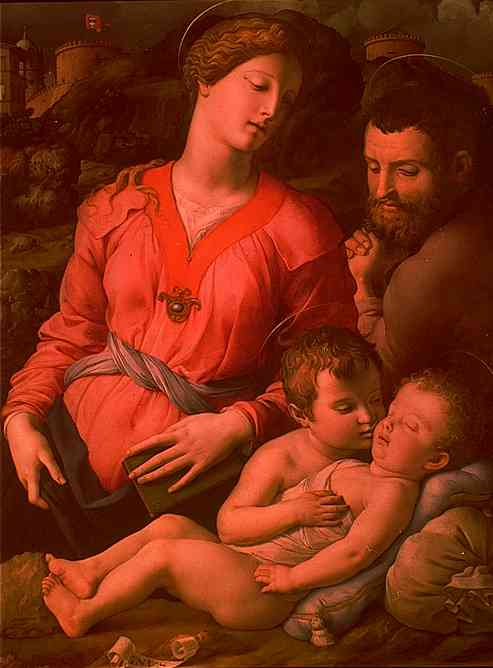
 Bronzino - The Holy Family - Florence the Uffizi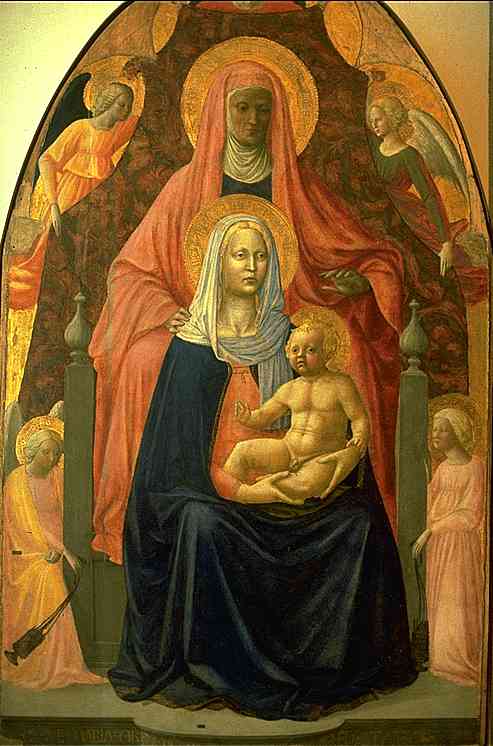
 Masaccio (Florence - San Giovanni Valdarno 1402 - Rome 1428) - La Crucifixion - Naples - Capodimonte
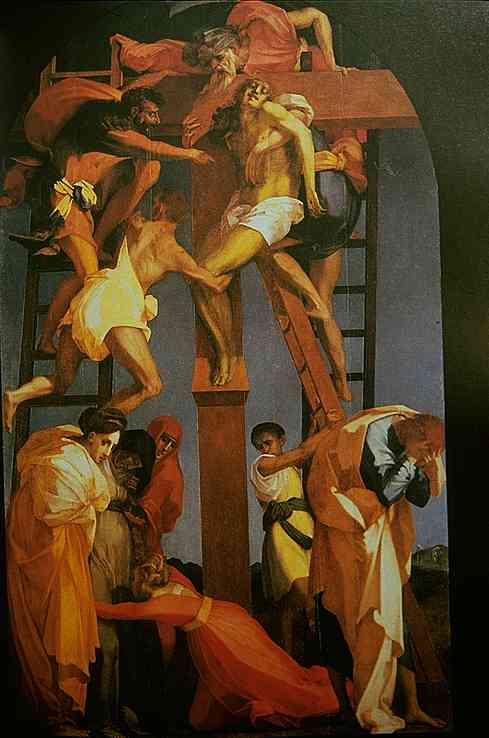
 Rosso Fiorentino (Florence 1495 - Fontainebleau 1540) - Deposition - Volterra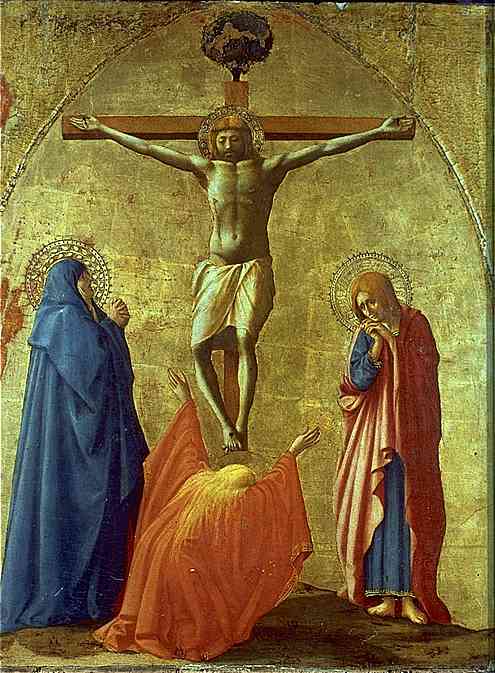
 Pontormo (Empoli 1494 - Florence 1557) - Deposition - Florence - San Felicità Church
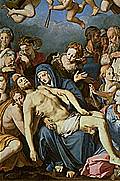 Bronzino - La Déploration sur le Christ mort -
Musée des beaux-arts et d'archéologie de Besançon
Bronzino - La Déploration sur le Christ mort -
Musée des beaux-arts et d'archéologie de Besançon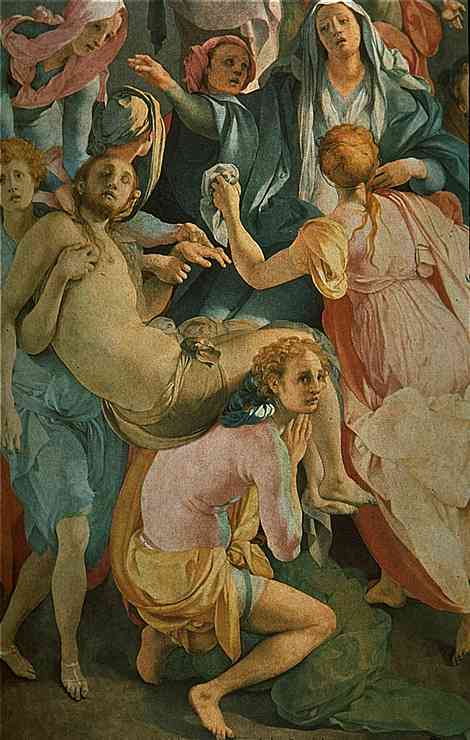
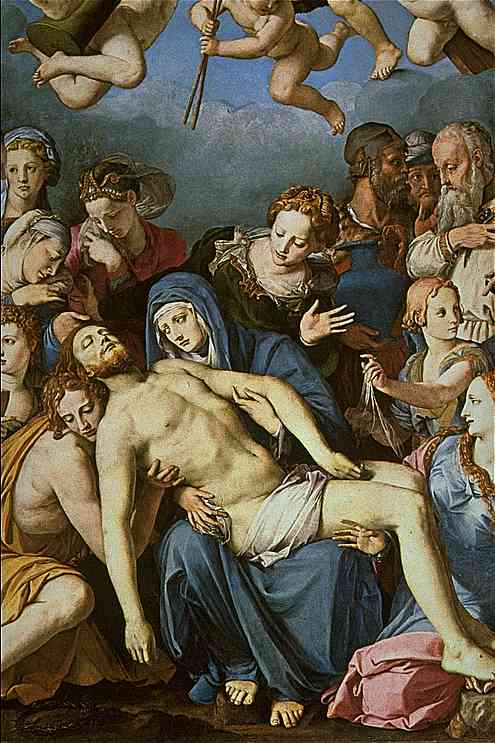
La Déposition de Bronzino est presque une Pietà. Le Christ est posé dans les bras de la Vierge, entouré des personnages qui ont participé à l'aventure. Une peinture dans laquelle Bronzino montre le goût qui est le sien pour des compositions très rigoureuses; magnifique ligne qui sinue à travers toute l'oeuvre, jusqu'au haut, et une contre-ligne qui donne l'équilibre, la sérénité à cette composition.
Les détails sont d'une grande beauté. En particulier, une des trois Maries avec cet extraordinaire gorgerin orfévré qui ressemble à un carcan. La plus belle, Marie-Madeleine, avec une coiffure extravagante et un visage d'une pureté de dessin presque sculpturale, impression due à la froideur des carnations. La plus étrange des figures est celle de l'Ange de la Passion qui tient dans son calice le sang recueilli de la plaie du Christ; remarquez la brillance des yeux, si propre à Bronzino, ou encore les boucles, qui sont traitées comme une pièce d'orfèvrerie en or. On sent ce besoin de rendre par les empâtements, la réalité d'une matière de façon très curieuse. C'est une peinture très présente, terrestre. Les personnages ont existence, volume, poids et espace.
Il est fascinant d'imaginer ce qu'ont dû être les débats entre le jeune Bronzino si près de la matière et ce Pontormo, plus mûr, si loin de la matière mais si près de l'esprit, et de penser à ce défi qu'ils se sont lancés, de créer sur un même thème, deux œuvres aussi diamétralement autres.
Jacopo Carucci, dit Pontormo
Empoli 1494- Florence 1556.
Cette déposition est à Florence, dans l'église Santa Félicita, dans la chapelle Caponi, où l'œuvre est entourée des quatre tondi de son élève, Bronzino. Pontormo est le peintre de l'immatériel.Le corps du Christ ne pèse rien, les personnages qui le soutiennent ne se tiennent que sur un orteil. Tous les drapés sont crées de façon à augmenter encore cette impression de vision. Pontormo est un visionnaire, alors que Bronzino est le témoin pragmatique de son temps. Ce qui est présence des corps chez Bronzino devient une absence, une ombre chez Pontormo. Nous allons nous promener dans cette œuvre car plus on la regarde de près, plus on se convainc que Pontormo est un des peintres les plus étranges de son temps, un des plus attachants.Le visage du Christ est complètement lavé de toute existence, de toute présence. Le visage de la Vierge se dilue dans l'eau de son voile; le voile et la robe ne font qu'un, on ne sait plus où commence la robe, où s'arrête la chair tellement l'ambiguüté l'a transformée en une cascade qui est celle de sa douleur.
Marie-Madeleine est plus présente, avec un côté inquiétant dans le regard. Les porteurs du Christ: celui de l'extrême droite, en olive et rouge, celui du bas, le seul qui nous regarde; très curieusement, il a l'oeil braqué sur le spectateur; le dernier, celui qui soutient le bras droit du Christ, a un visage qui rappelle celui du Christ, plus jeune et traité de nouveau avec ce même sens lavé du pinceau.
 Piero della Francesca - Virgin with Child Surrounded by Saints - Milan - La Brera
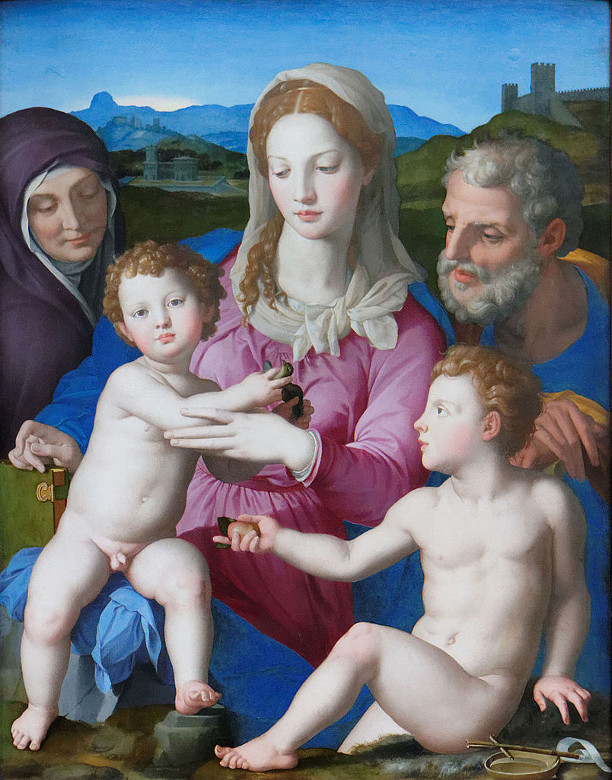
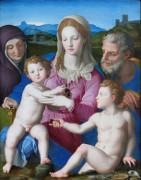 Bronzino - The Holy Family with St Anna and the Infant St John the Baptist - Louvre Museum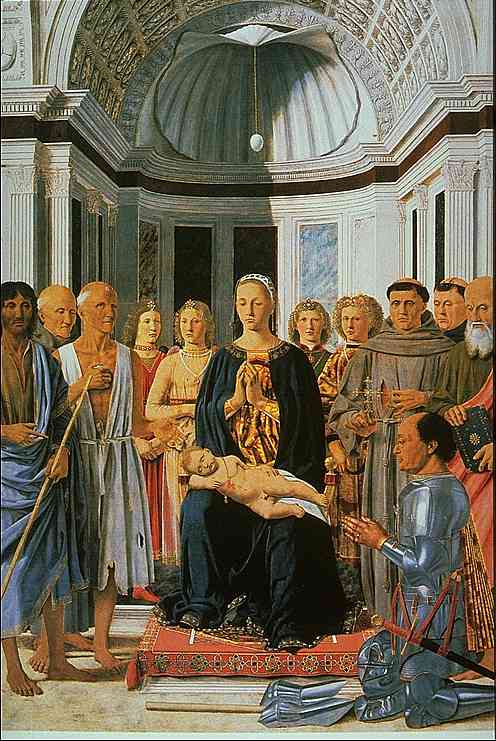
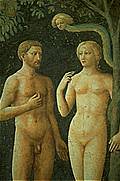 Masaccio - Adam and Eve - Florence - Brancacci Chapel
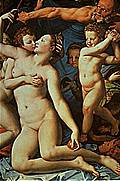 Bronzino - Allegory, known as The Triumph of Venus - London- National Gallery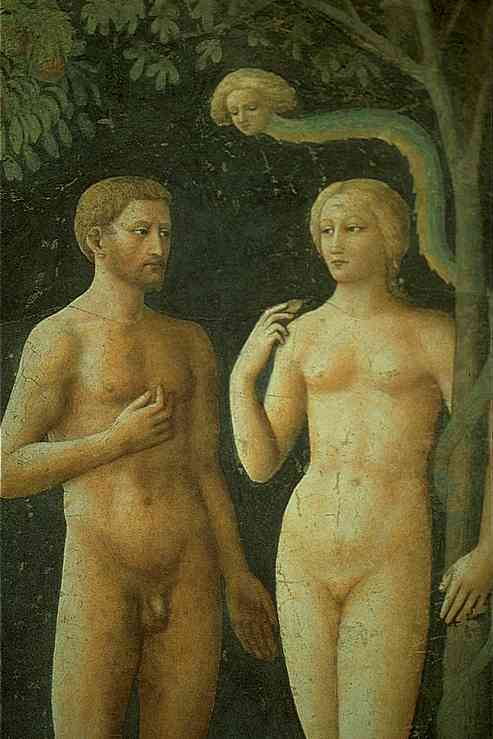
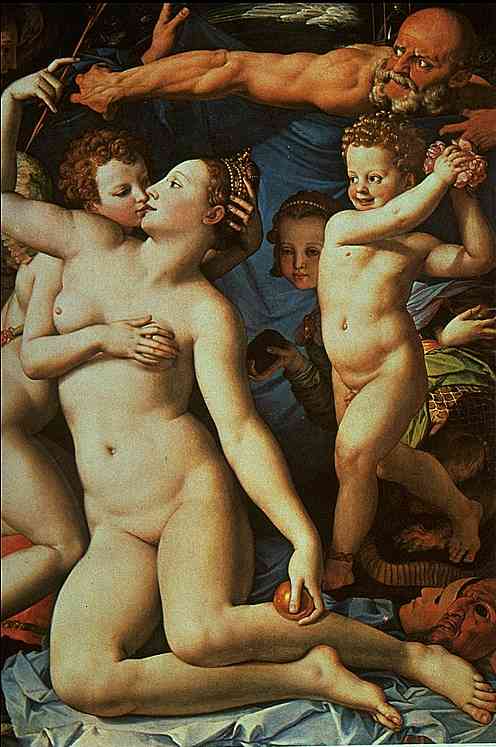
En 1545, Cosme 1er demande à Bronzino de peindre pour François 1er, un tableau ayant trait à l'Amour. Avec l'aide d'un humaniste, Landinelli, Bronzino exécute ce tableau. François 1er l'a reçu, l'a compris, l'a aimé. Tout y est dialectique érotico-philosophique, parfaitement dans les moeurs maniéristes de Chambord, à cette époque-là. Henri IV le relègue au magasin des accessoires. Il est oublié, vendu, revendu. Au 19e siècle, il est acheté par la National Gallery où il se trouve aujourd'hui.
Il s'agit d'un tableau nous montrant Vénus embrassée, presque violée par son propre fils: l'Amour. Vénus se donne pour qu'il ne voie pas la pomme qu'elle a reçue de Paris ( le début du péché originel mythologique puisque c'est le début de la guerre de Troie). Elle essaie de lui cacher la flèche qui lui appartient, à lui, Amour, afin qu'il n'exerce pas plusloin ses ravages. La mère tente de castrer de ses pouvoirs un fils qui se fait trop pressant. Autour de Vénus et de l'Amour, toute une série de personnages représentent les peines et les joies de l'amour. Il Piacere, le Plaisir que Bronzino s'est amusé à peindre sous les traits d'un satyre dansant hellénistique. Derrière, se cache la fourberie, qui a le plus joli visage de petite fille que l'on puisse imaginer, la plus jolie petite robe de toutes les couleurs, mais qui révèle une queue de serpent, car elle est naturellement mi-femme, mi-serpent.
D'une main elle tient un rayon de miel, de l'autre, un aspic. Le plaisir et la douleur en même temps. Les deux mains sont inversées: sa main droite est une main gauche, sa main gauche est une main droite...
Jusque dans les moindres détails ce tableau est un tableau de l'ambiguüté. Le baiser de l'Amour et de Vénus est extraordinairement physique. La mère et le fils ont un rapport incroyablement présent.
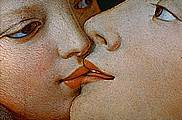
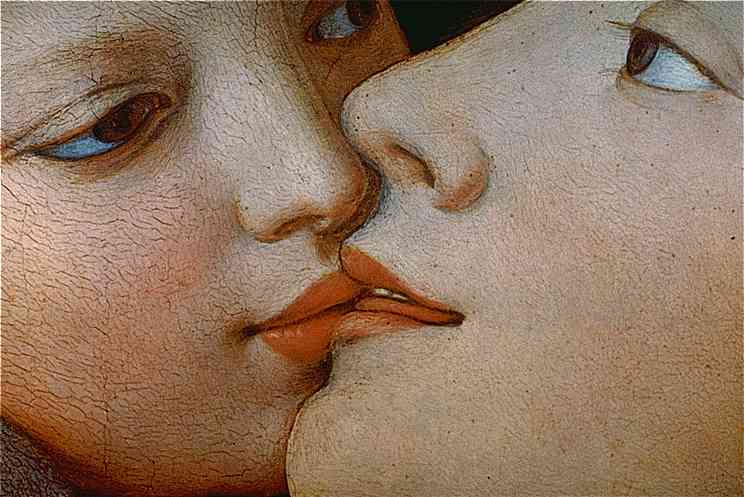 La jalousie se trouve à gauche, horrible vieille femme.
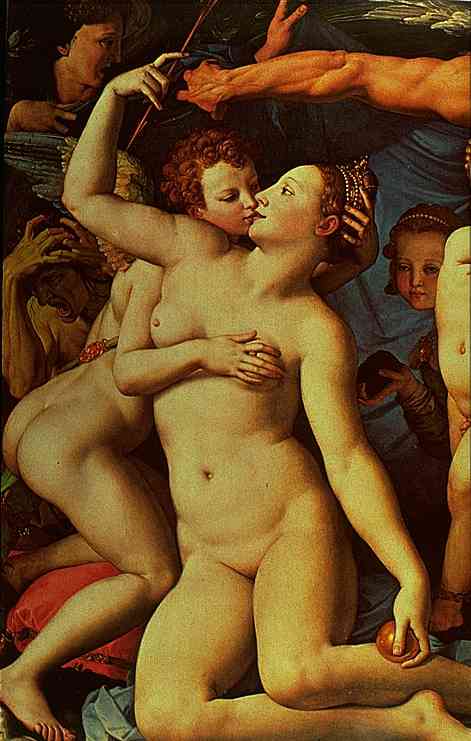
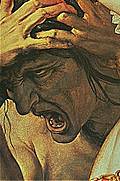
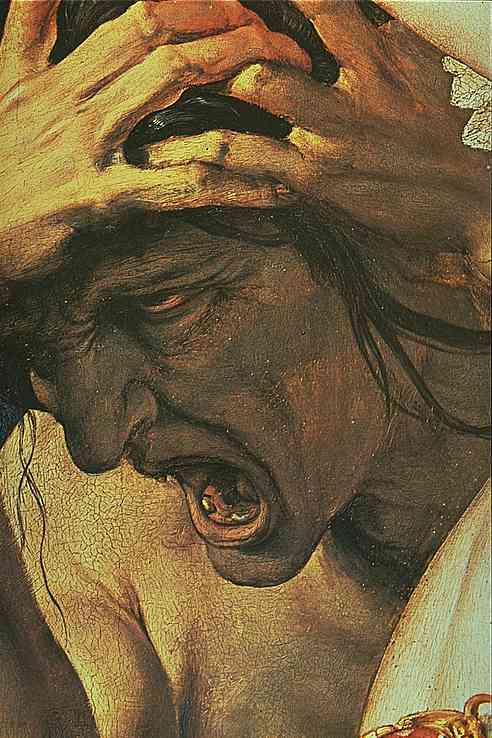
Regardez la qualité et la beauté de cet ensemble avec pour dernier détail, ces deux masques.
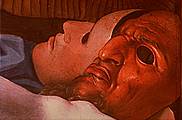
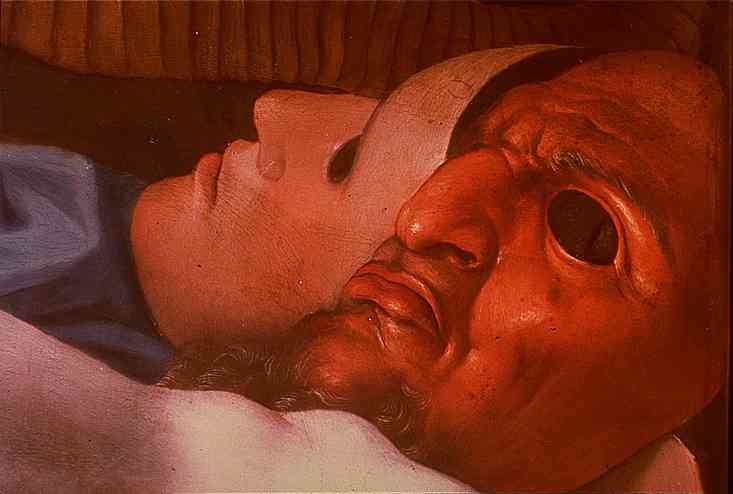
Une jeune femme et un vieillard.
 Filippo Lippi (Florence ca. 1406 - Spoletto 1469)
Bronzino - detail of the Allegory - London - National Gallery
Filippo Lippi (Florence ca. 1406 - Spoletto 1469)
Bronzino - detail of the Allegory - London - National Gallery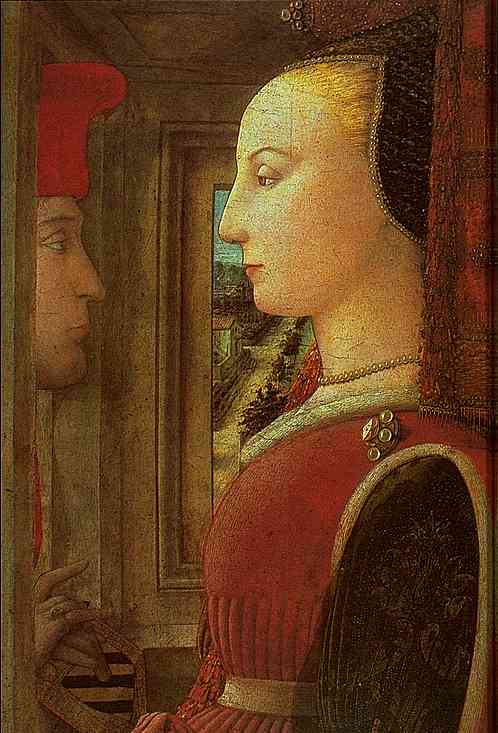
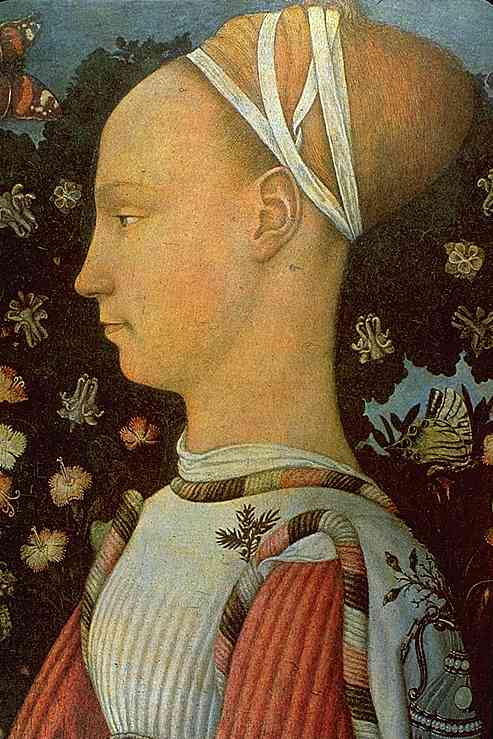
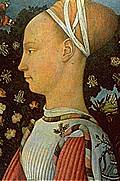 Pisanello - Princess of the House of Este - Paris - the Louvre
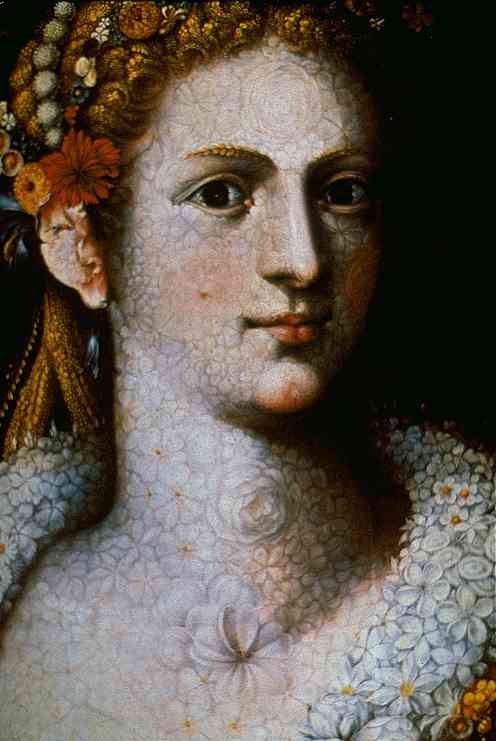
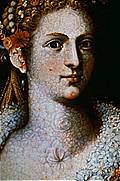 Giuseppe Arcimboldo (Milan 1527 -1593)- Flora - Paris - private collection
 Piero della Francesca - detail of Virgin with Child - Milan - La Brera
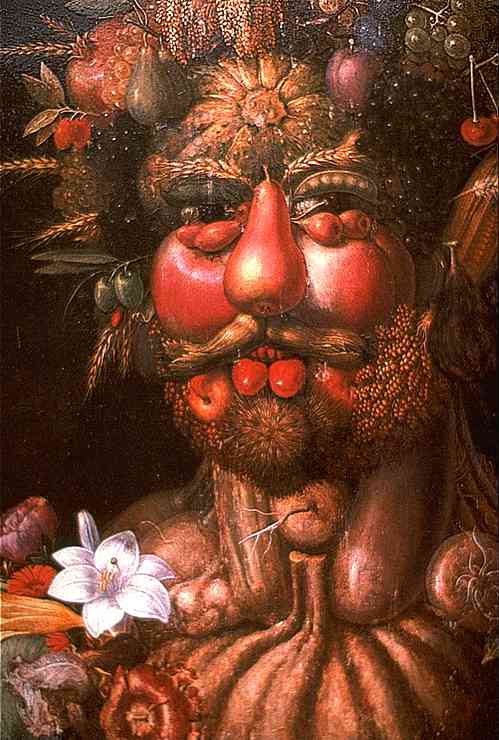
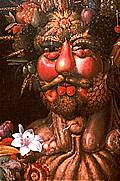 Giuseppe Arcimboldo - Vertumne - Sweden - Skokloster Castle
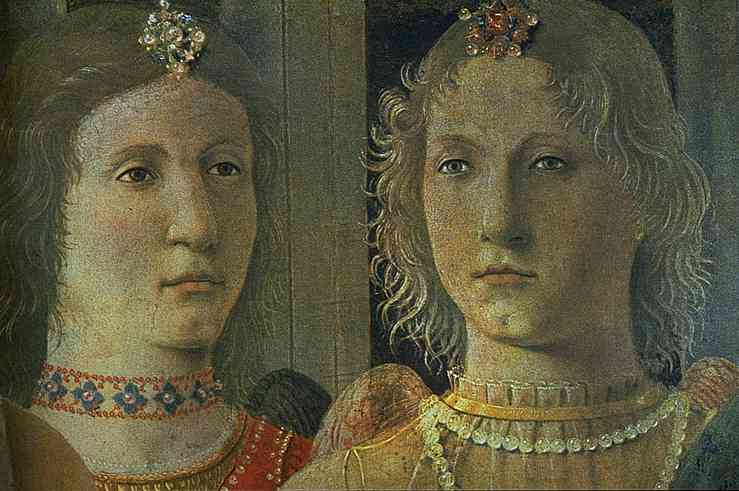
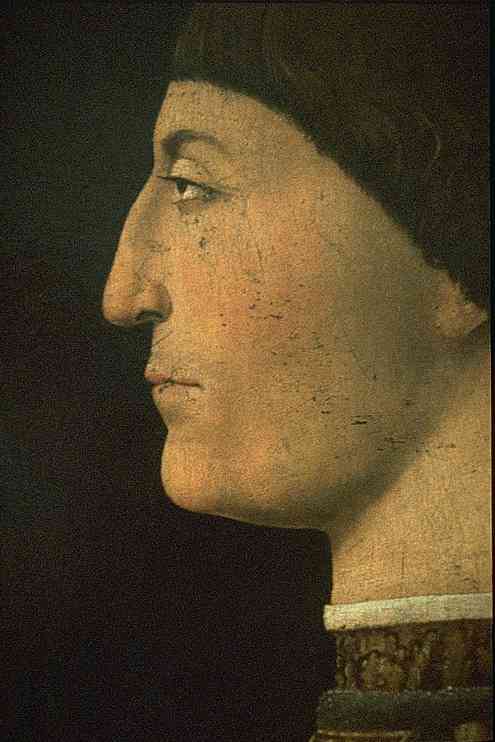
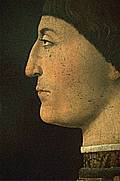 Piero della Francesca - portrait of Sigismondo Malatesta - Paris - the Louvre
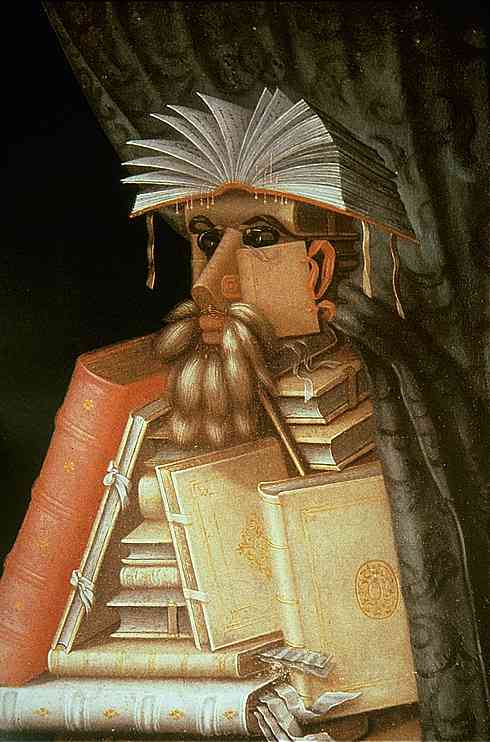
 Giuseppe Arcimboldo - The Library Man - Sweden - Skokloster Castle
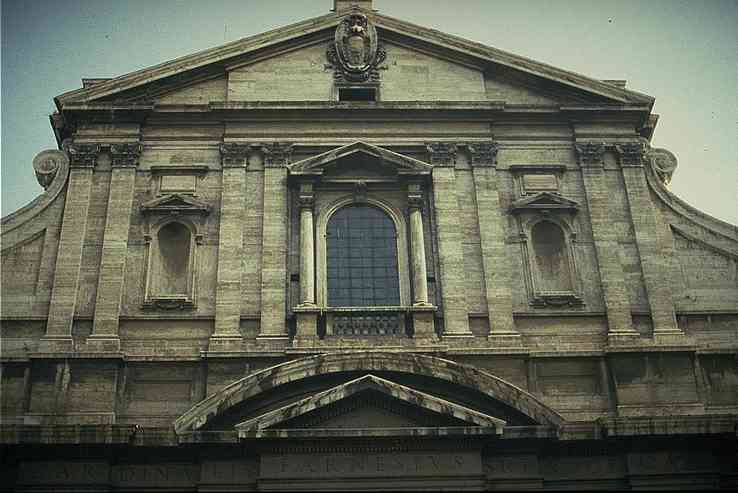
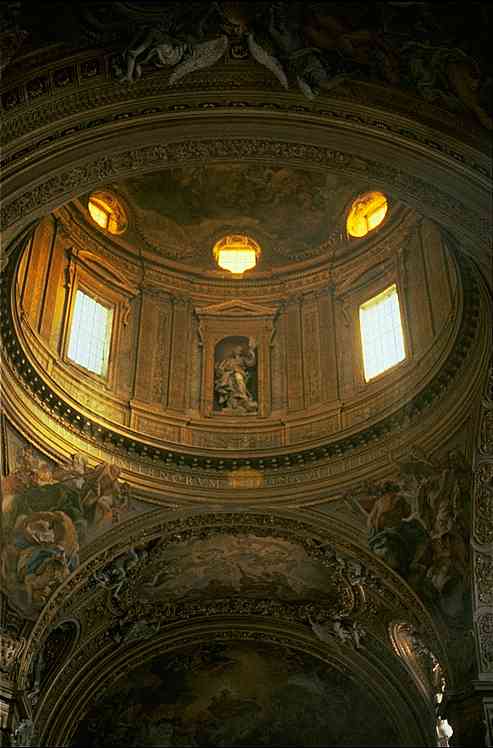
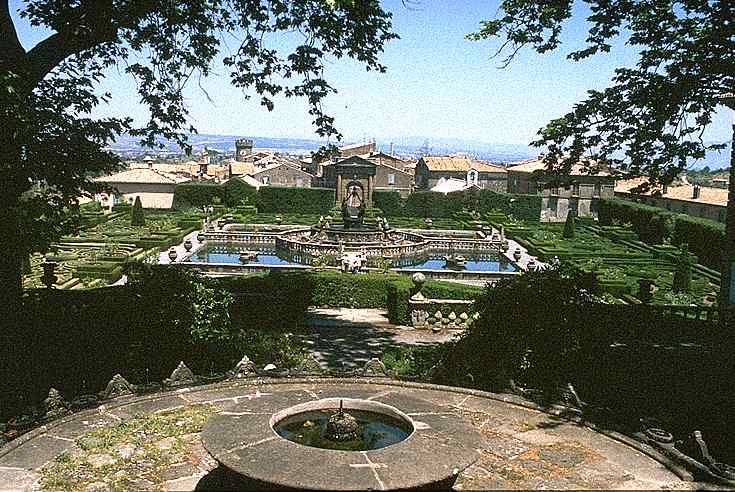
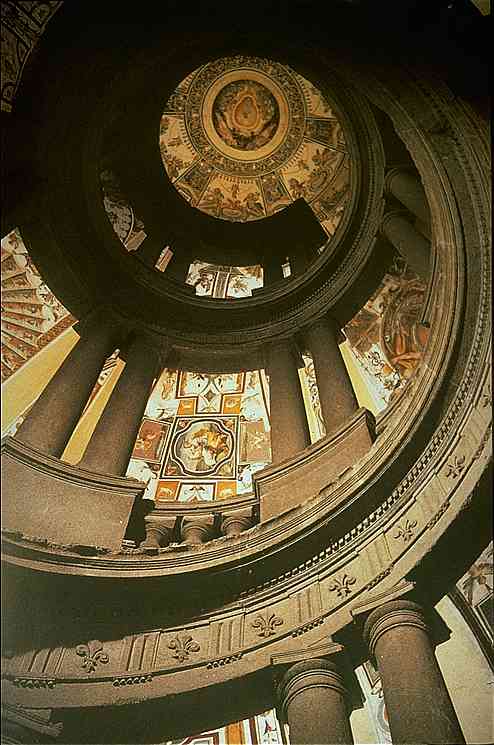 Vignola réalise, à partir de 1566, la Villa Lante à Bagnaia ( édifices, jardin et parc). Mais ce que l'on considère comme son chef-d'œuvre absolu, c'est l'église du Gesù, à Rome, qu'il construira beaucoup plus tard.
En règle générale, ces gens-là étaient complètement ignorés du public. Même le public curieux, connaisseur et érudit, les détestait. Le temps a passé. Les idoles se déboulonnent, de nouvelles valeurs prennent leurs places. Raphaël a connu un exil et connaît aujourd'hui encore un exil assez grave. Curieusement, Bronzino, lui, est l'objet d'études, de livres, d'expositions beaucoup plus nombreuses.
Lorsque Vinci, Michel-Ange et Raphaël sont morts, la société italienne a exigé des jeunes artistes qu'ils fassent perdurer le génie et la gloire des ancêtres en imitant leurs manières. Un style d'imitation, de manière, d'où le nom de Maniérisme donné à ces jeunes peintres qui, de 1530 travailleront jusque vers 1610 et ne seront supplantés que par le Baroque naissant.
Le Maniérisme est le chaînon manquant entre la Renaissance et le Baroque. Le Maniérisme exige de ses artistes, des œuvres qui enchantent, surprennent, affolent, inquiètent. On ne doit pas rester devant une œuvre maniériste froidement esthétisante. A l'époque de Piero della Francesca et à plus forte raison d'un Masacio, on pouvait admirer dans le calme. Un spectateur maniériste ne peut pas rester calme. Il lui faut la stridence des sons, que ce soit dans l'éclat de rire, ou dans l'angoisse fondamentale la plus débridée. Il faut des sentiments exacerbés. Voilà pourquoi l'insolite est de mise dans ces jardins-là.
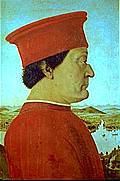
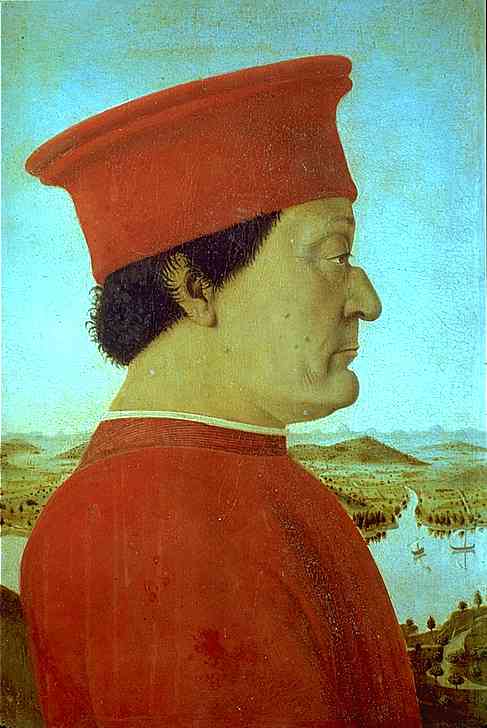 Le Duc d'Urbin se justifiant par la vastitude des horizons qu'il semblait ainsi patronner. Le Prince de la Renaissance goûte la Nature. Pourquoi le jardin plus particulièrement? Un jardin, cela se modèle, cela se fabrique ; donc le jardin est une nature sur laquelle l'homme peut avoir une incidence. L'homme sculpte la Nature : l'homme est presque l'égal de Dieu. Les Princes de la Renaissance, lorsqu'ils commandaient ici une cascade, là une montagne et des perspectives en face, se sentaient un peu comme Jupiter tonnant au sommet de la Sixtine, ou, si vous préférez, ils se sentaient Dieu, le Père. Le jardin est donc un lieu que les Princes ont particulièrement prisé. Un jardin propose un périple, un jardin raconte une histoire. Cette histoire est ponctuée de moments forts, dans lesquels le Génie de la Science et les merveilles de la Nature pourront être conjugués. Une grotte de Vulcain permet à un Prince de la Renaissance de s'exalter.
Pourquoi?
Parce que cela lui permet de garder les Dieux chez lui. Par là même de jouer à l'égal des Dieux.
Le côté allégorique était très important pour beaucoup des commanditaires de jardins de cette époque. Une grotte de Vulcain, par exemple, doit être pittoresque. Pour être pittoresque, on va réunir de partout au monde les objets les plus étranges et les plus rares qui vont être inclus dans le décor. Goût de la Renaissance pour les coraux rares, les coquillages rares, les pièces rares.
Après l'Allégorie, la Science.
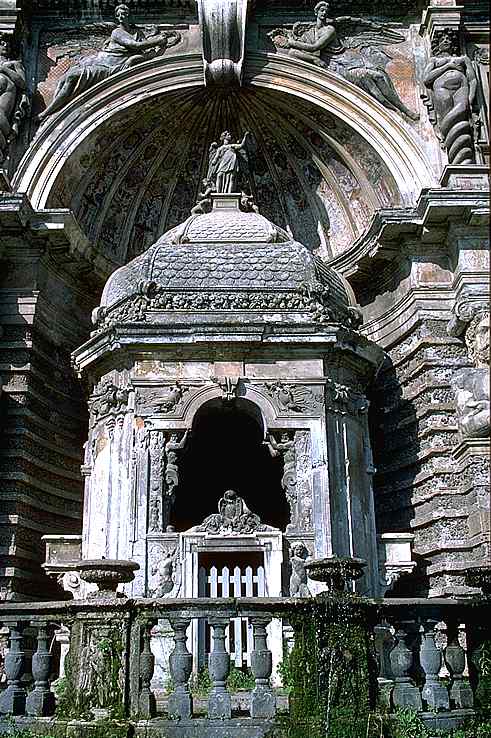
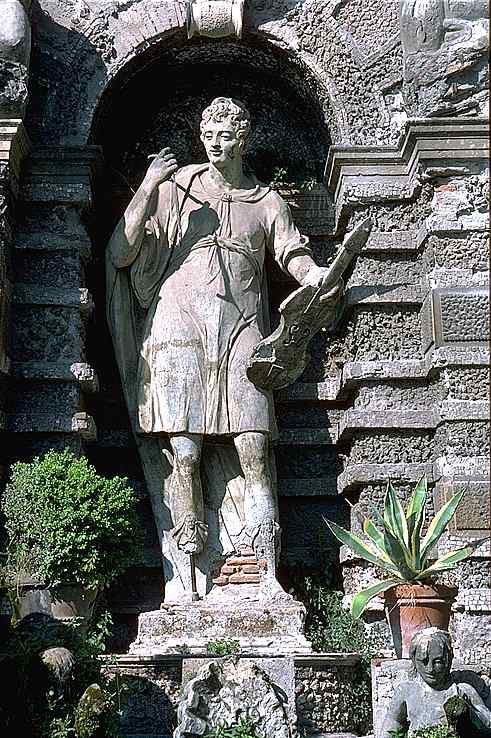
Il y avait, ajoutées, les merveilles du Génie humain, l'ingéniosité, comme les automates ou fabriques, dont la sophistication ne cessera de croître jusqu'au moment où l'on pourra animer 10, 15, 20 figures, sous forme de tableaux que l'on fera jouer au gré du plaisir des spectateurs. Allégorie, réunion des sciences, sciences prospectives pures, trois raisons pour lesquelles ces "fabriques" se sont mises à peupler ces jardins. Ils sont devenus toujours plus élaborés, compliqués, chers aussi, mais fragiles surtout. Quelques années d'abandon suffisaient à détruire à jamais l'ingéniosité de ce que l'on a commencé à appeler à cette époque.
Départ ici
Ce programme a été conçu par Line Chatelain, ancienne élève de J-E Berger, à partir des notes et des illustrations qu'il a réunies pour ses cours et ses conférences.
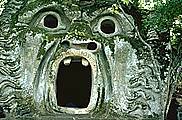
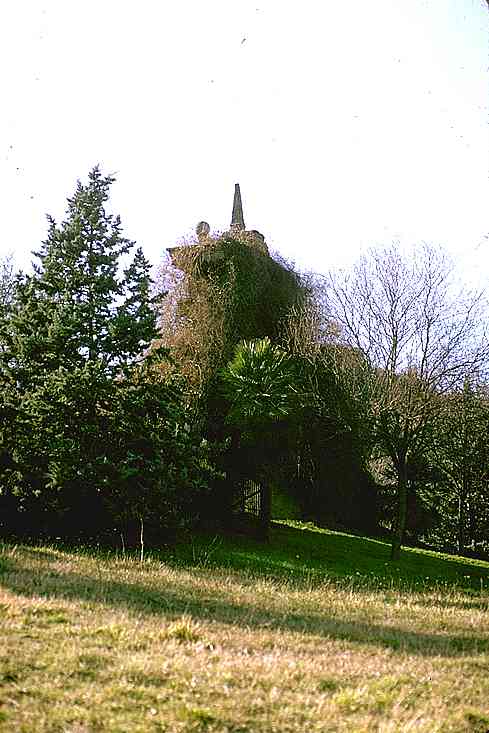
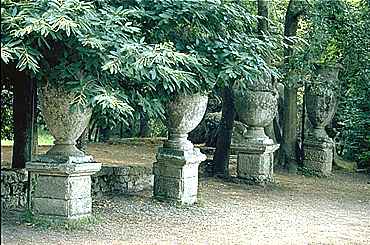
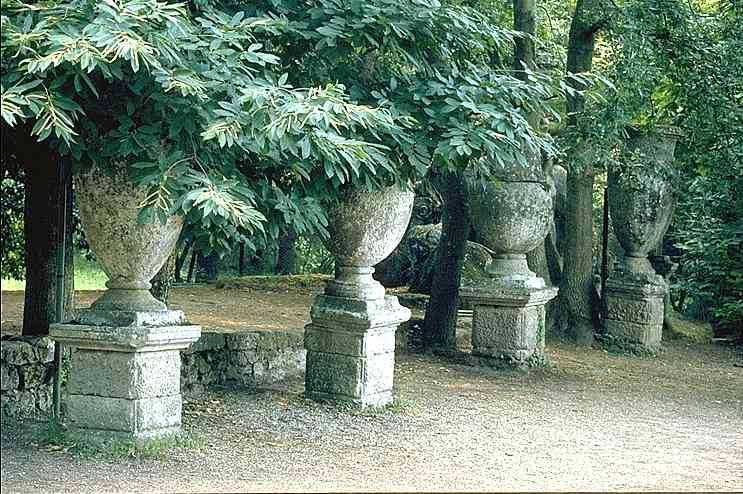
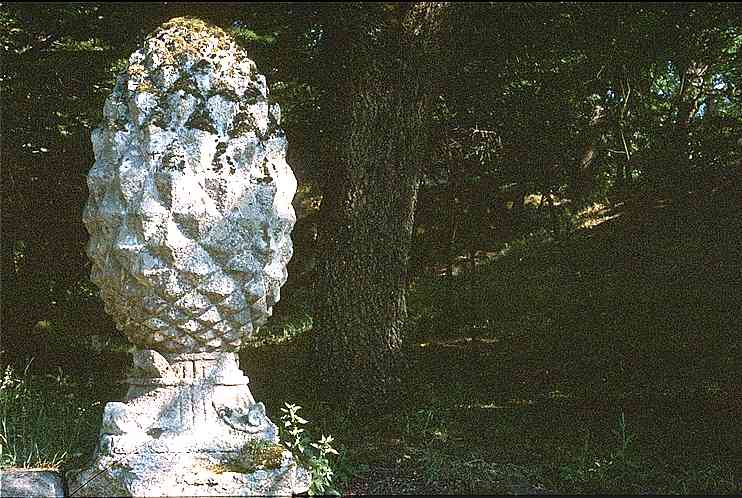
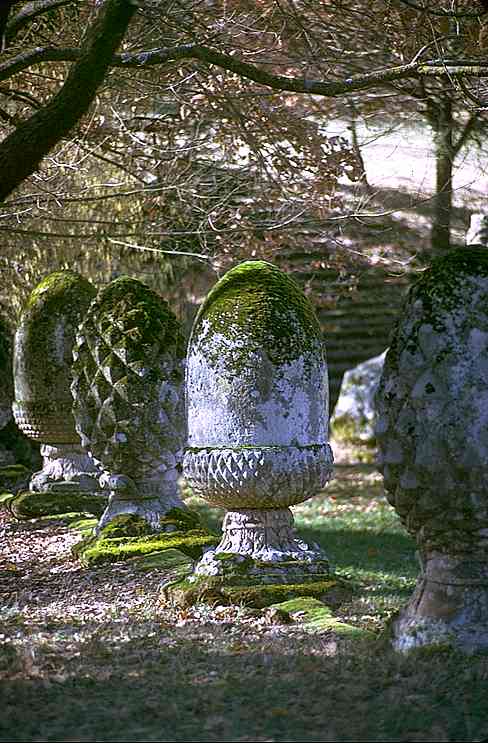
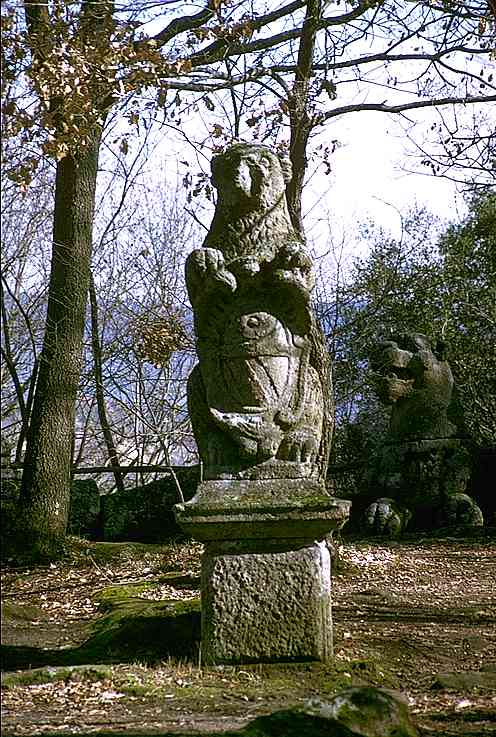
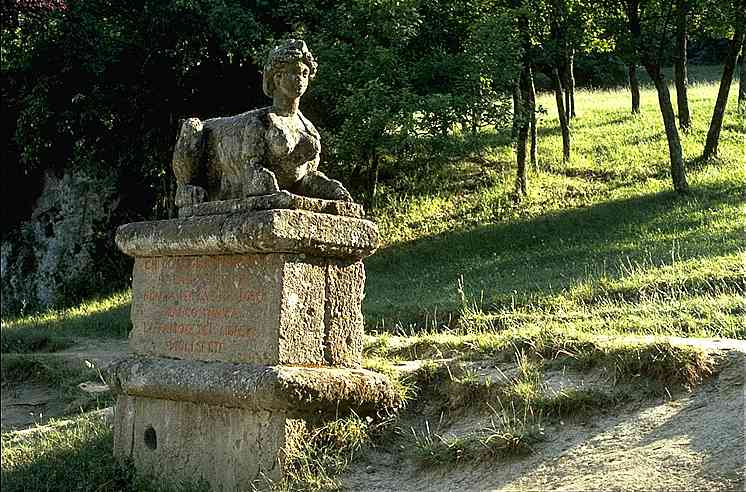
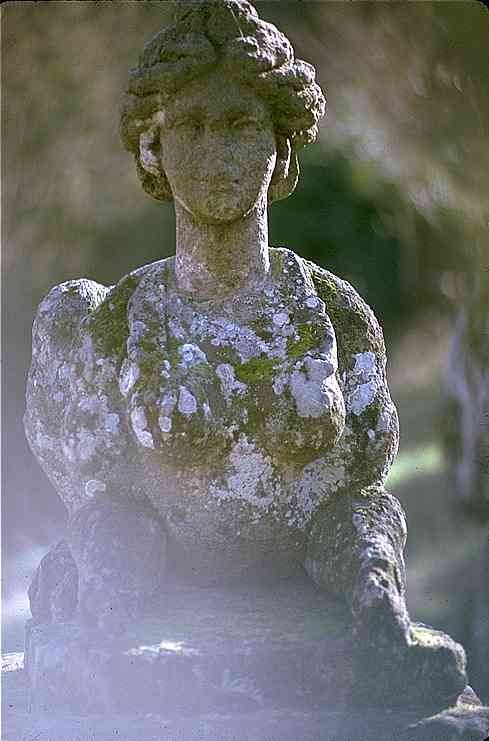
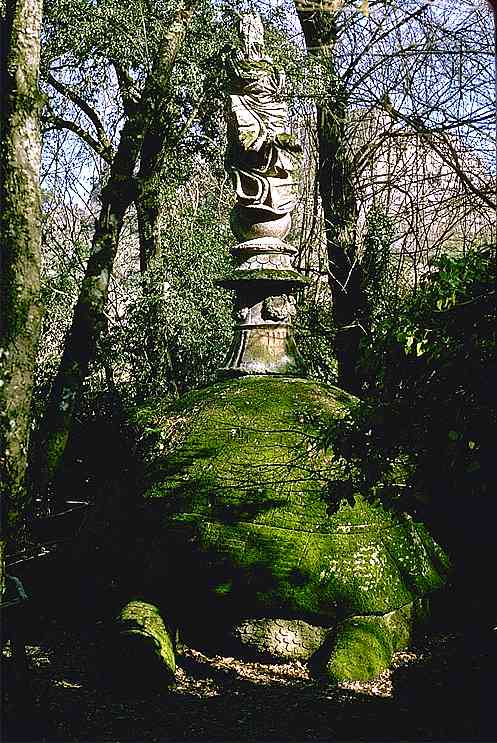
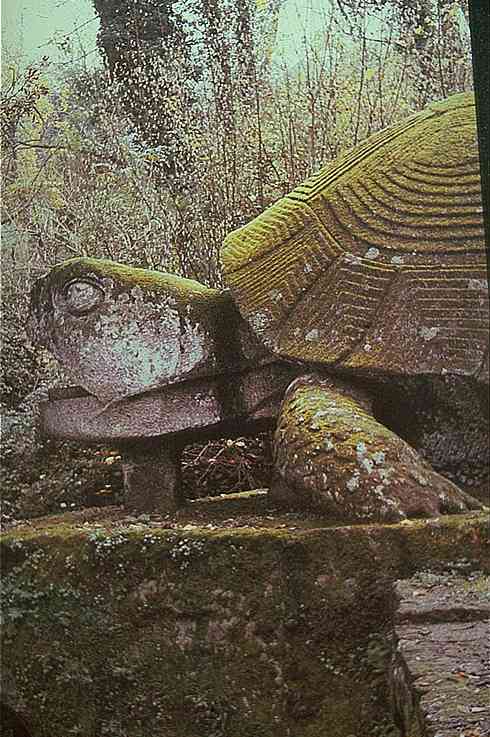
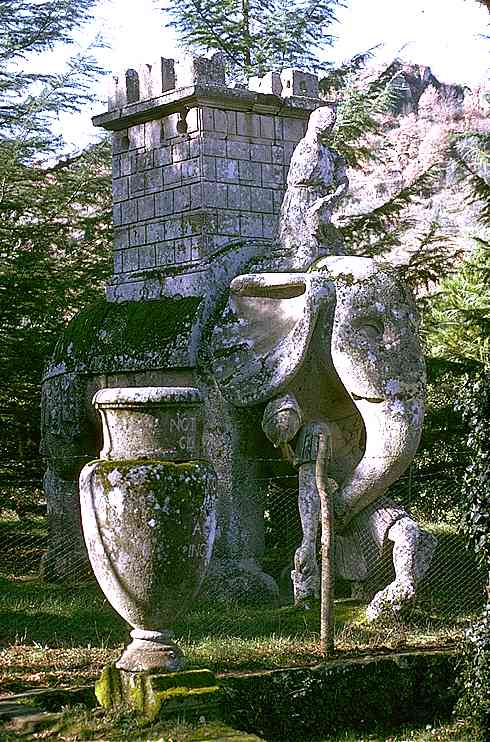
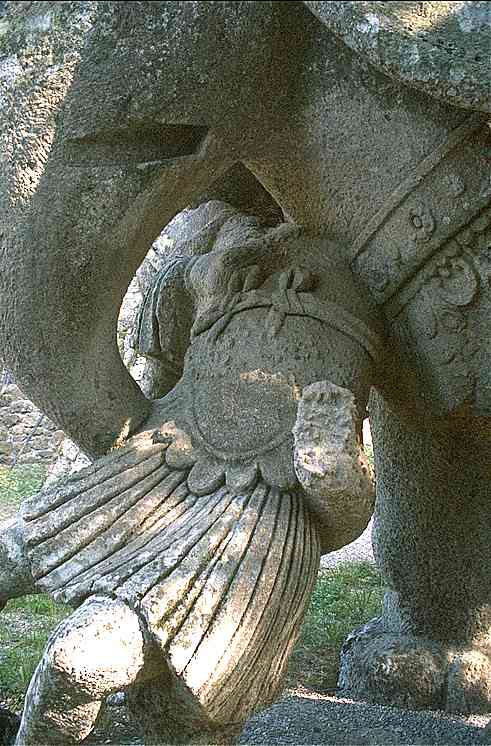
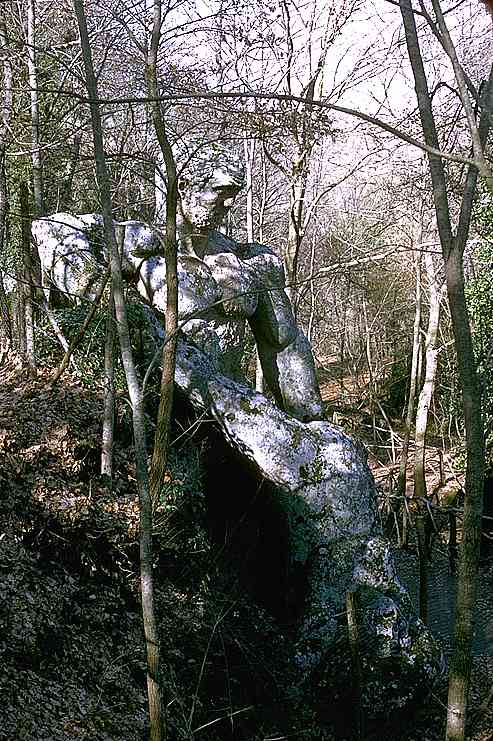
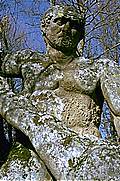
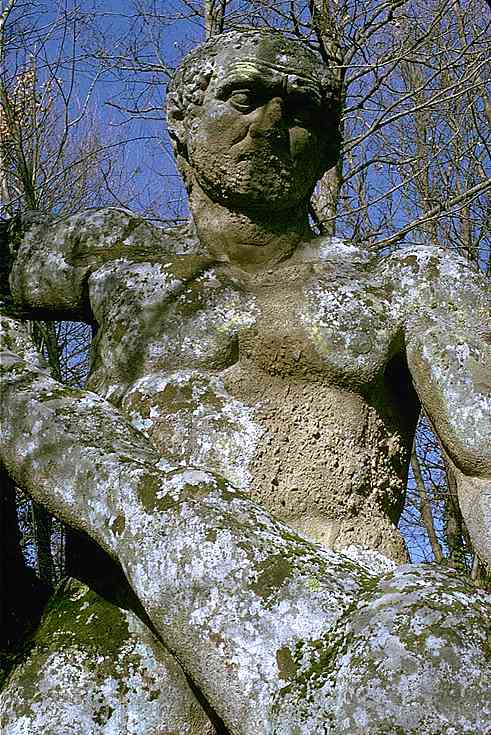
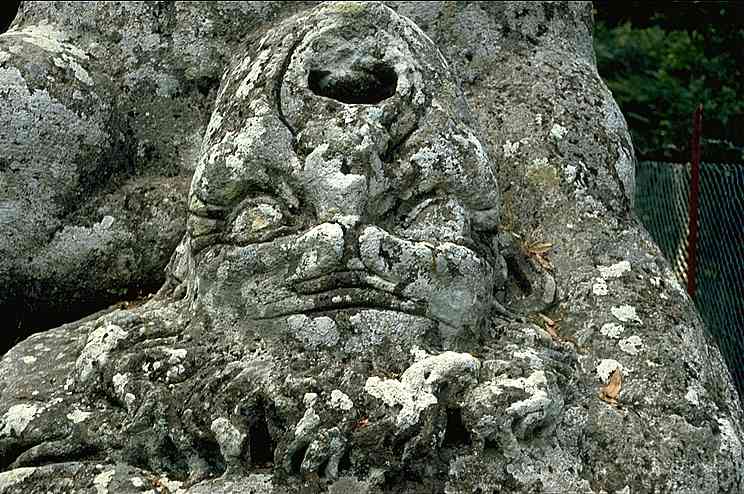
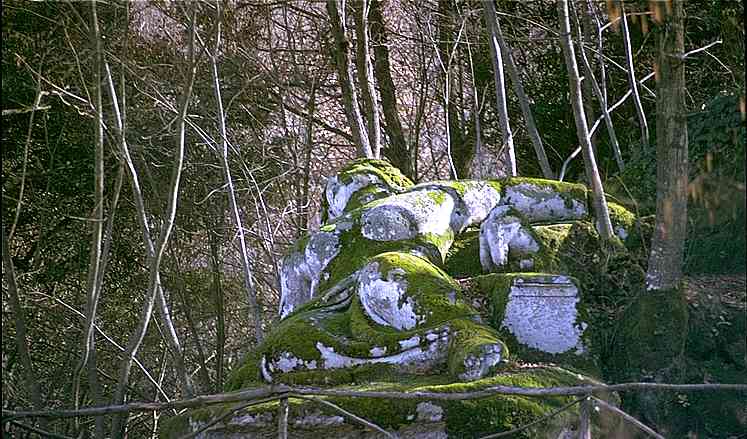
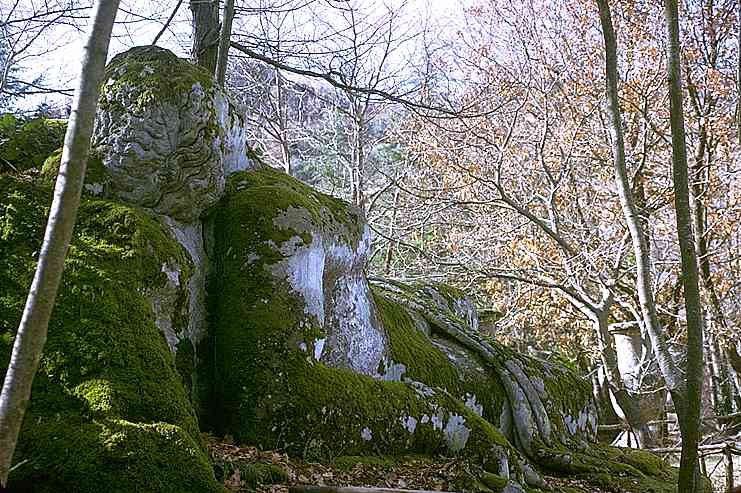
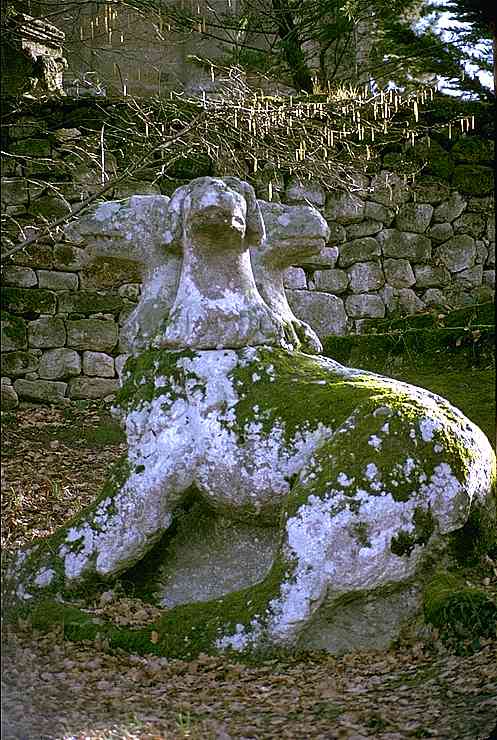
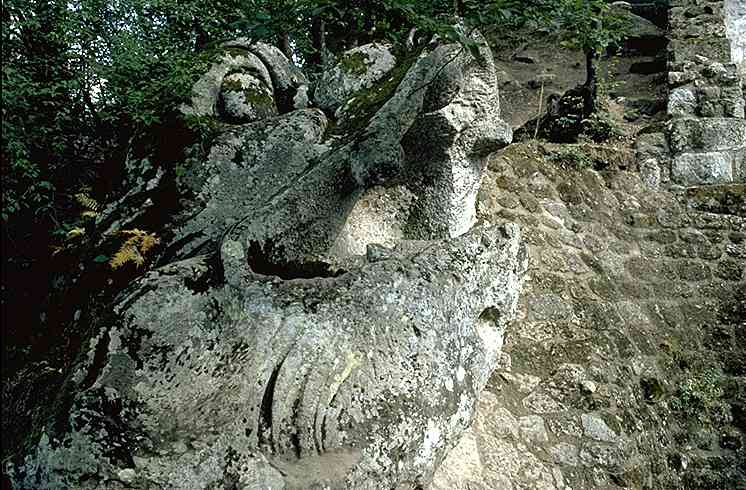
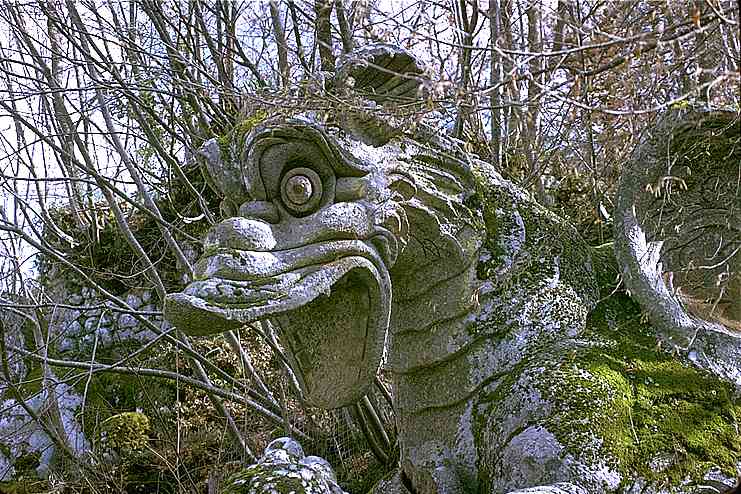
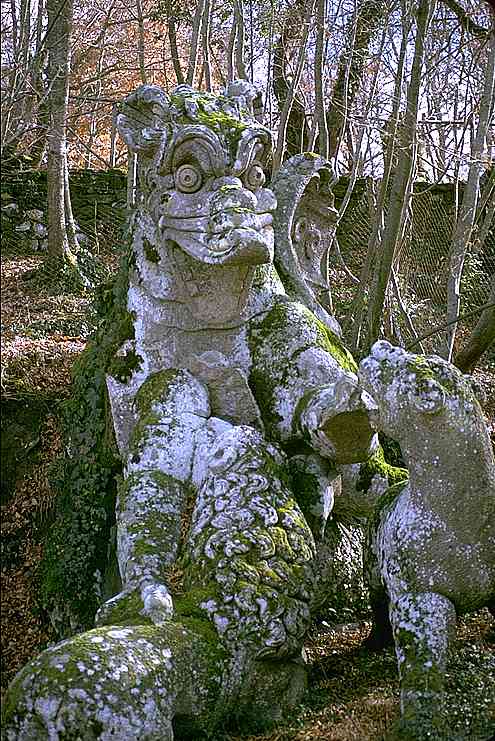
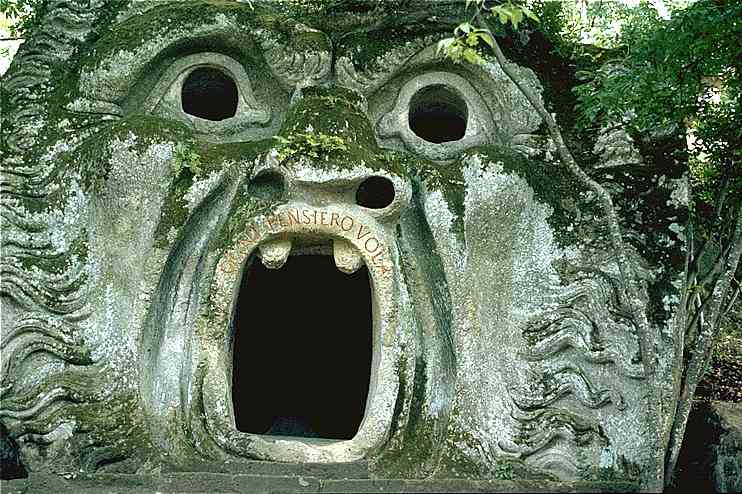
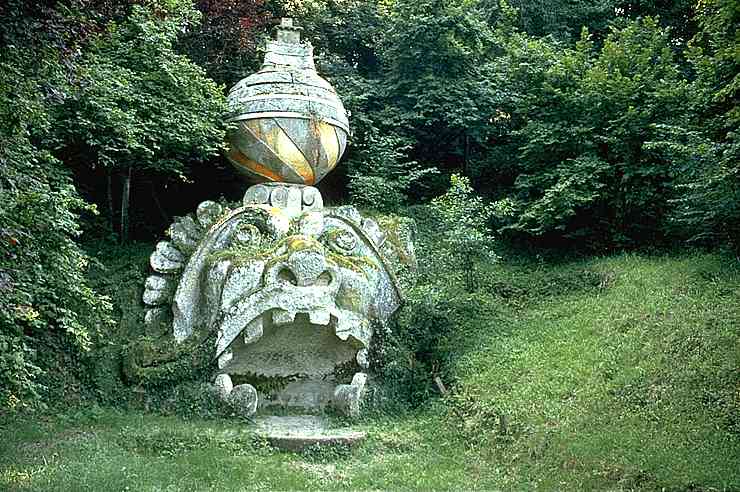
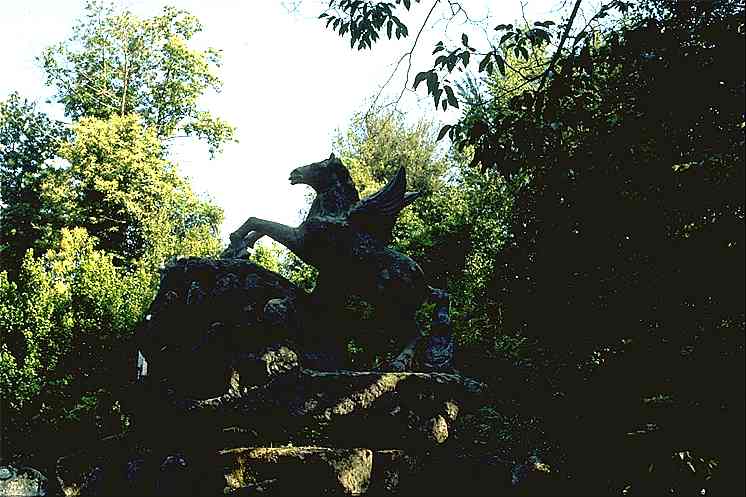
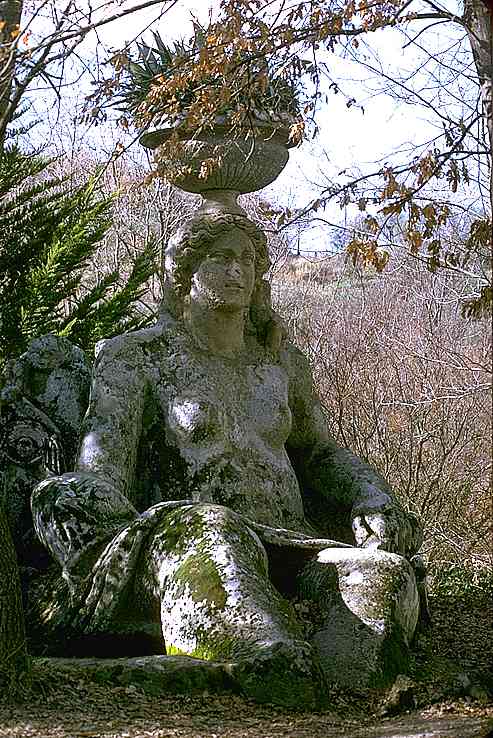
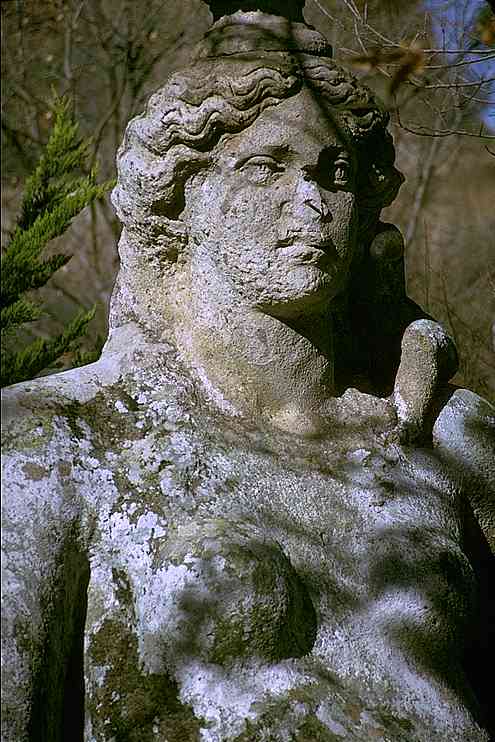
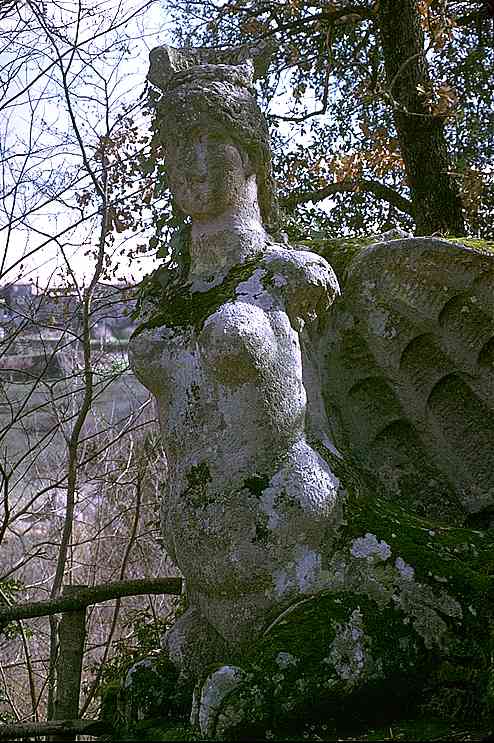
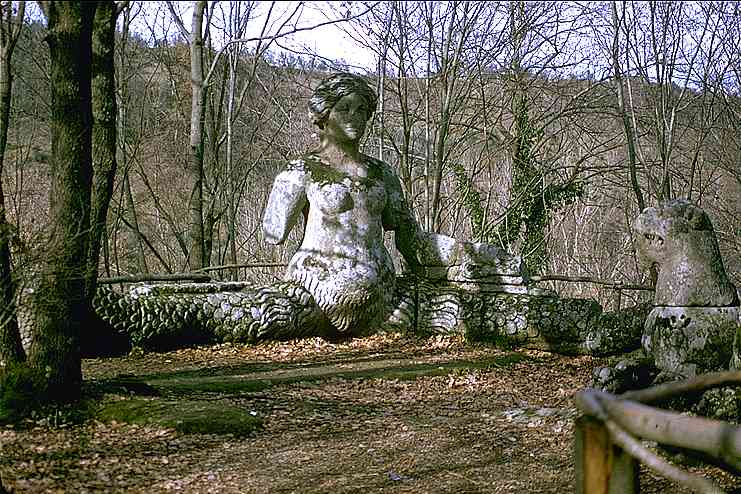
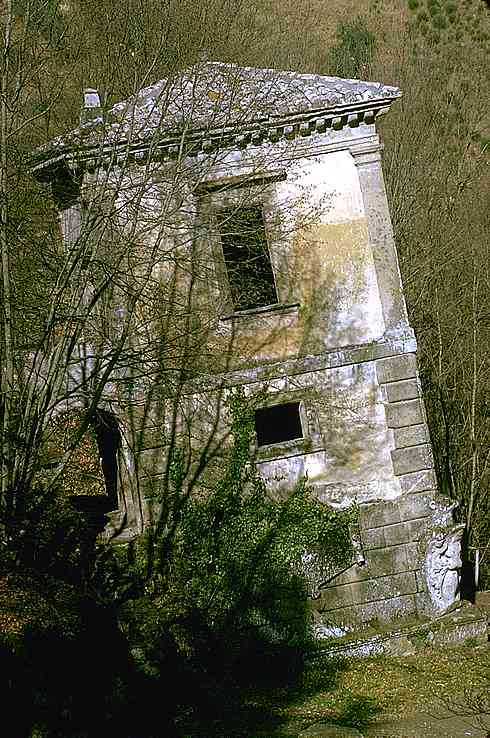
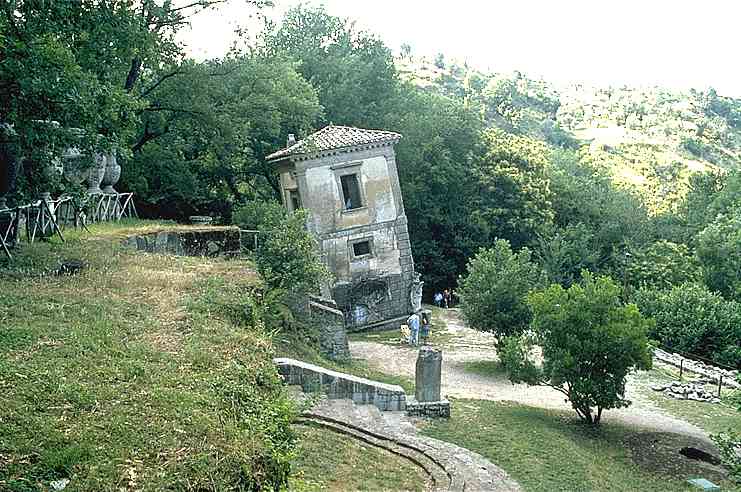
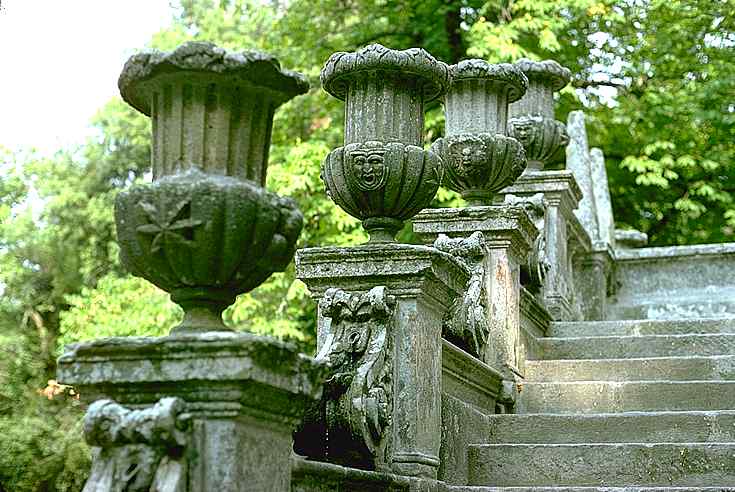
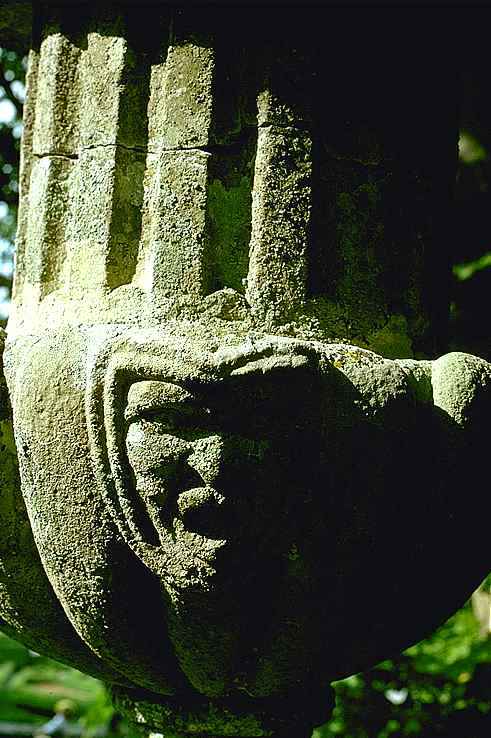
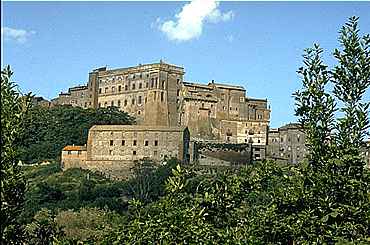 Il est le fief héréditaire de la famille Orsini. Au pied de ce petit bourg se dresse le Château. Les jardins de la résidence sont l'œuvre de Vicino Orsini; Duc de Bomarzo, il est né en 1523 et mort en 1583. Humaniste lettré, il s'intéresse aux Arts, les protège. Il consacre sa vie au bonheur de sa maison et de son épouse, Julia Farnèse. C'est à la mort de Julia Farnèse qu'il crée l'enseignement de ce jardin. Il donne à ce jardin non pas le titre de jardino, mais de Bosco Sacro, Bois Sacré ou Bosco dei Monstri, Bois des Monstres. Il faut entendre monstre dans le sens du latin monstrare, ce qui montre et démontre. Cela veut donc bien dire que de passage en passage, d'étape en étape, chaque élément est l'élément d'un immense poème, très néo-platonicien, à l'amour perdu de son épouse.
Pour construire ce jardin, il fait appel a l'un des plus grand jardinier, architecte de son temps, Pirro Ligorio
Tout jeune, il aime dessiner. On l'a laissé dessiner.On a choisi un maître à la mode du temps: Polidorio da Caravaggio. Il monte à Rome en 1534 et travaillera pour les grandes familles romaines, dans cette esthétique du trompe l'oeil, sophistiquée, qu'on appelle "grotesque". Il travaillera pour les Caraffa de Rome, pour les Orsini, pour les Este et même pour les papes. Il fera tout ce que l'on veut. Il est encyclopédique. De la fresque, de l'architecture, de la "recarrosserie" de façade, des jardins et des perspectives.
"Un architecte, écrit-il, n'est pas un architecte plébéien, un maçon, c'est un homme qui ordonne et défend tout ce qui touche à l'Art, si bien qu'il doit connaître la philosophie, les théories musicales, la symétrie, les mathématiques, l'astronomie, l'histoire, la topographie, l'analogie, la perspective (...) il doit savoir peindre et dessiner."Ce portrait lui convient tout à fait. On lui doit des choses extrêmement importantes. La cour du Belvédère au Vatican, celle qui abrite entre autre le Laocoon.

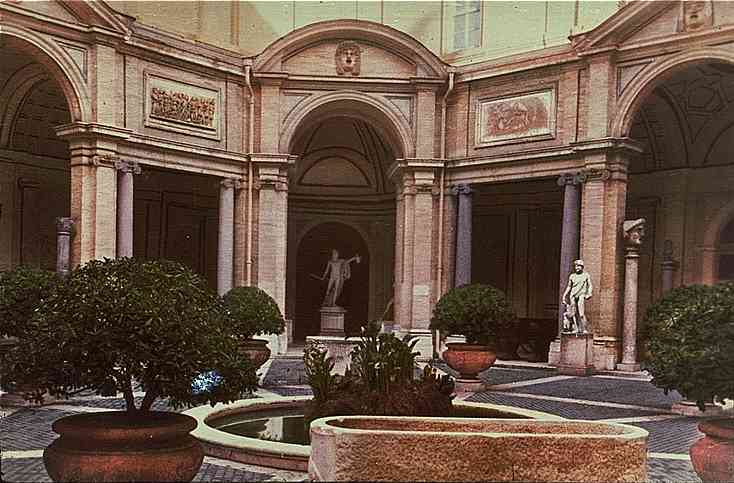 Le nymphée de la villa Julia, à Rome, est également de lui.

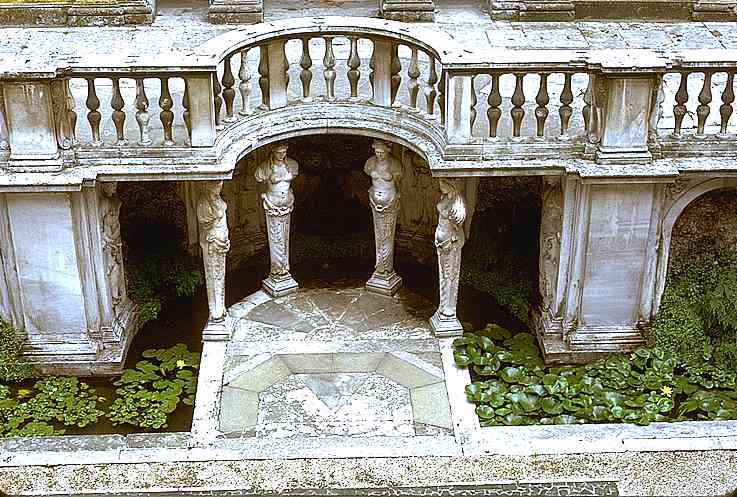 Il assouvit en même temps sa curiosité d'érudit et de spécialiste de l'Antiquité. En 1549, il commence les fouilles de la villa d'Hadrien, à Tivoli, sur la demande d'Hippolyte d'Este. En 1553, il publie le "Livre des Antiquités". Il est de plus en plus connu et comme il est aussi bien dessinateur que peintre, peintre que sculpteur, ornemaniste qu'hydrolicien et paysagiste, on lui confie des jardins de plus en plus nombreux.
C'est ainsi que Vicino Orsini fait appel à lui pour créer Bomarzo. Un texte, tiré du "Livre des Antiquités" sur le sens de son travail à Bomarzo.
" ... Bien que les grotesques parussent fantastiques ou profanes, tous étaient symboles et choses ingénieuses, faites non sans mystère... Il y a des formes si fantastiques que l'on croit rêver, là ont été amalgamées les choses morales et fabuleuses des dieux. ...Ils ont été retrouvés par hasard, ni à des fins fantastiques, ni pour montrer des choses insolites et folles , ni pour se servir de leur variété comme motif décoratif, pour transformer des demeures en lieux de délice...Ils sont faits pour provoquer la stupeur et l'émerveillement chez les misérables mortels, pour illustrer autant que possible la fécondité, la plénitude de l'intelligence, ses facultés imaginatives... Et pour montrer comment la vie se manifeste, pour mettre en valeur la prolifération des thèmes nés des choses crées...". Pour Hippolyte d'Este, il conçoit les jardins de la Villa d'Este.
C'est l'époque où, André Pieyre de Mandiargue y est allé et a écrit un texte sublime sur le jardin endormi de Bomarzo. Les Surréalistes Salvador Dali et Cocteau en parlent énormément. Bomarzo est à la mode. Bomarzo renaît:


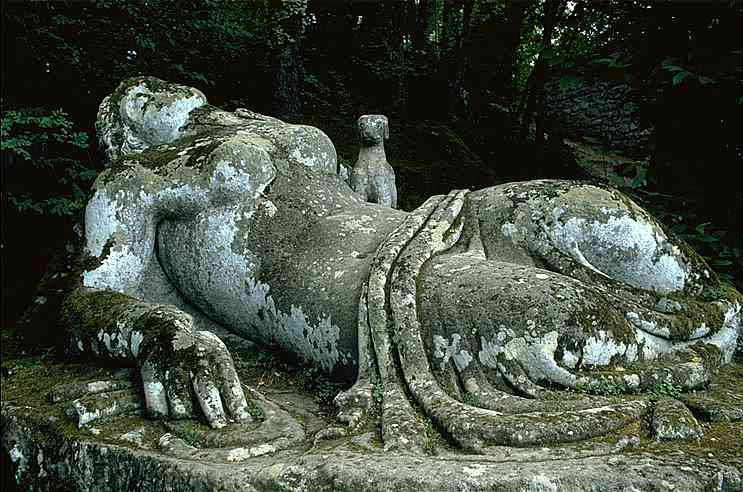
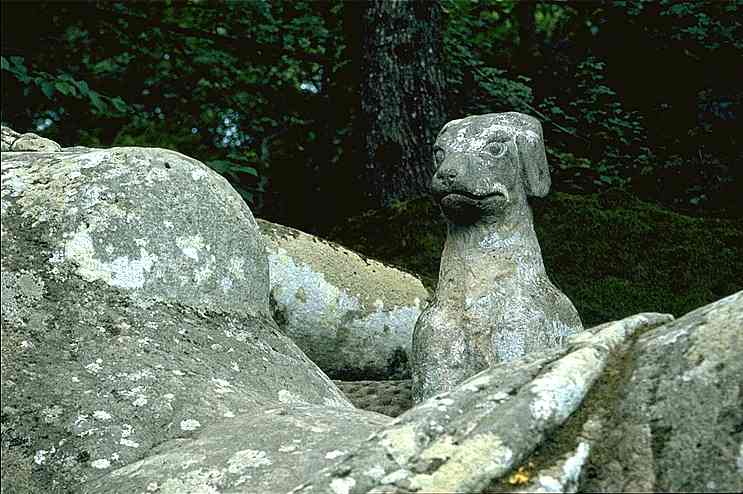

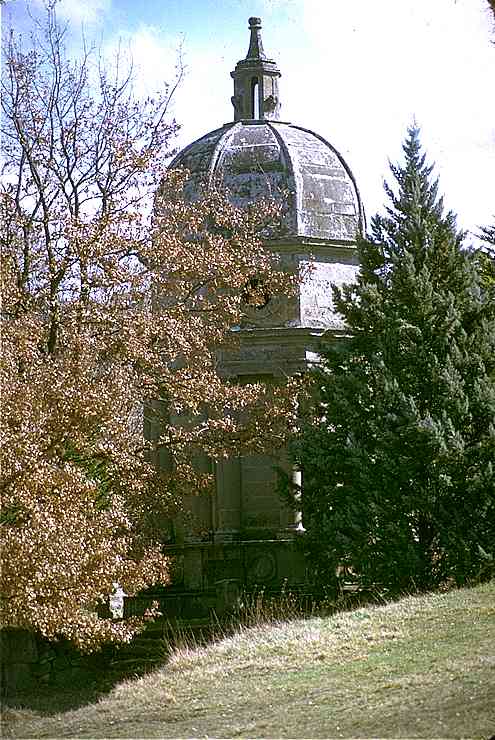
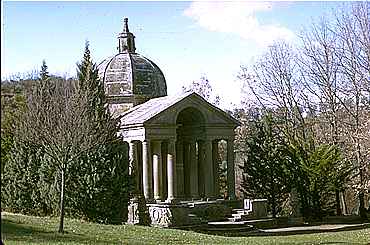
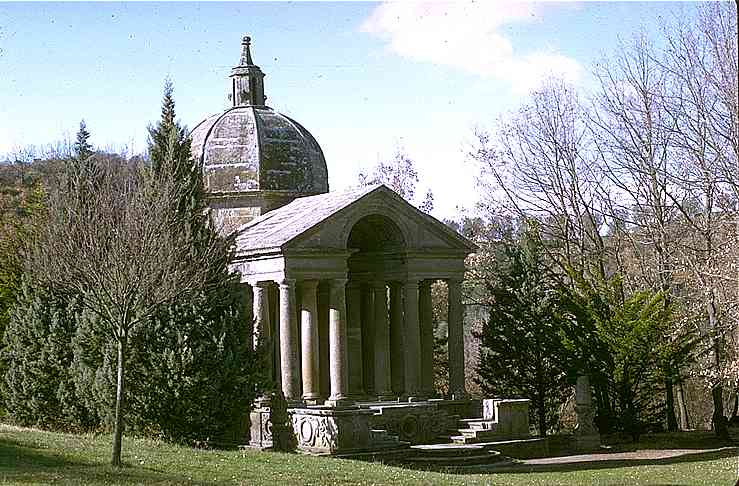
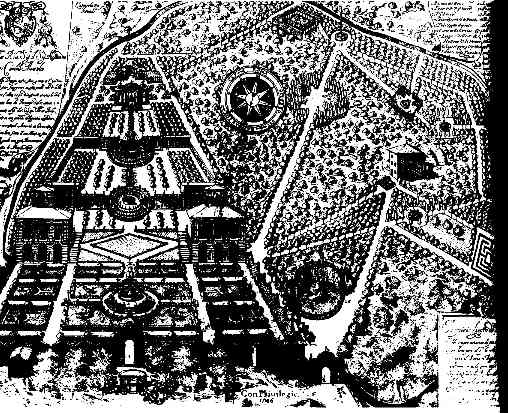
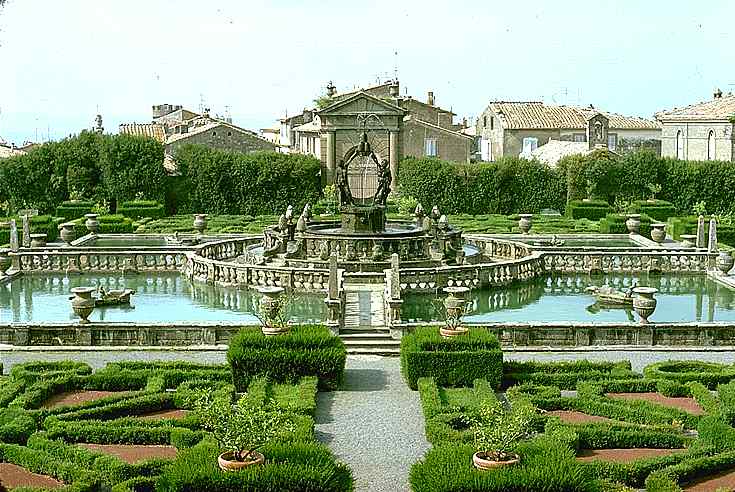
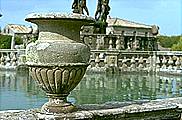
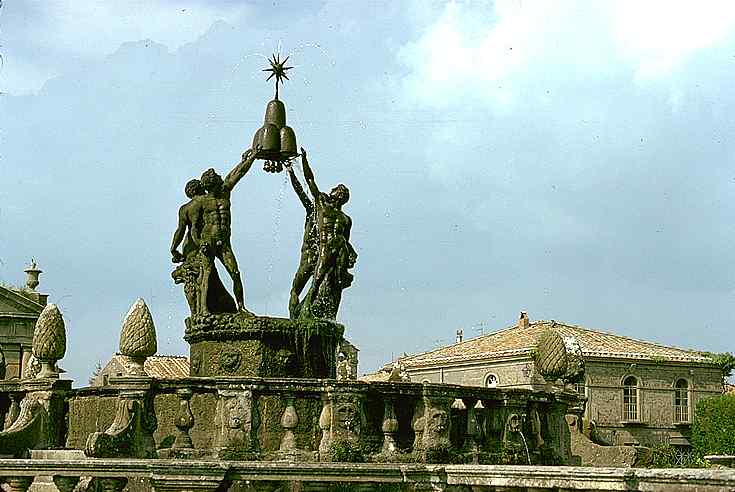
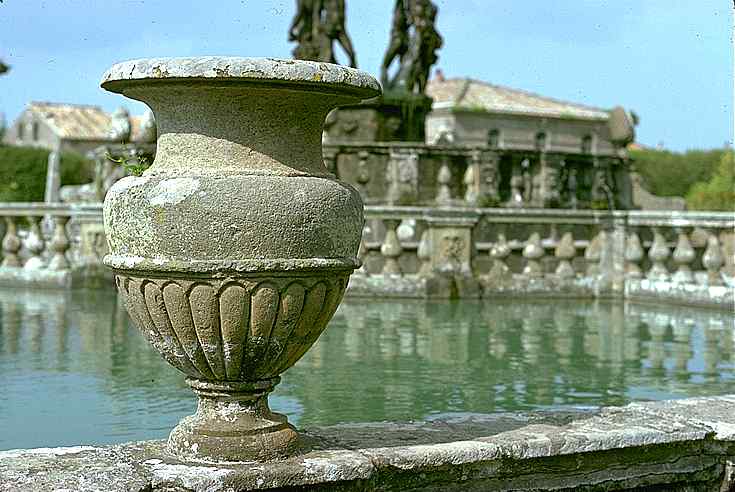
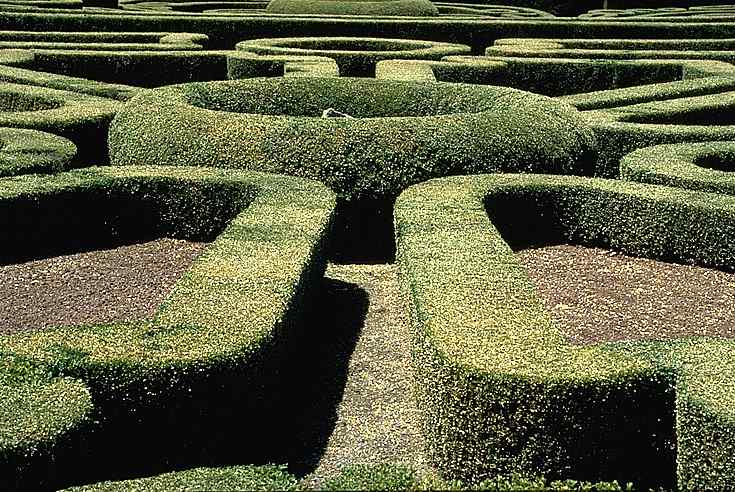
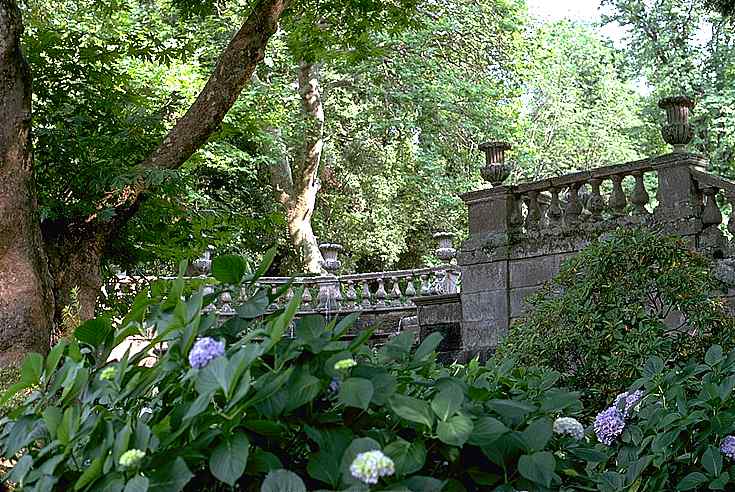
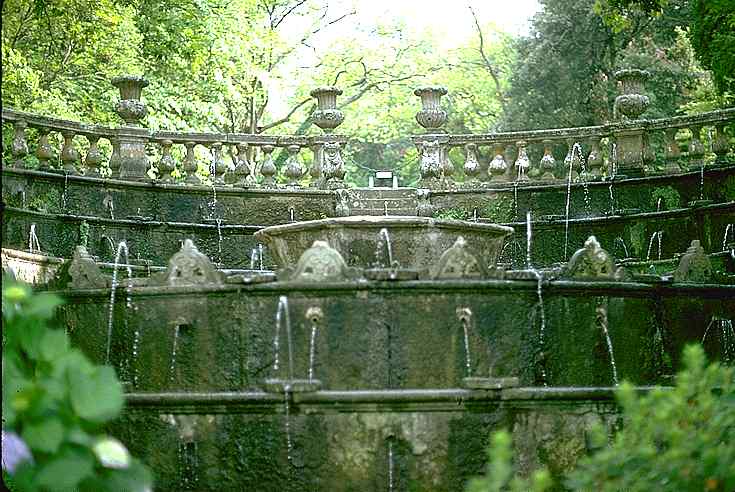
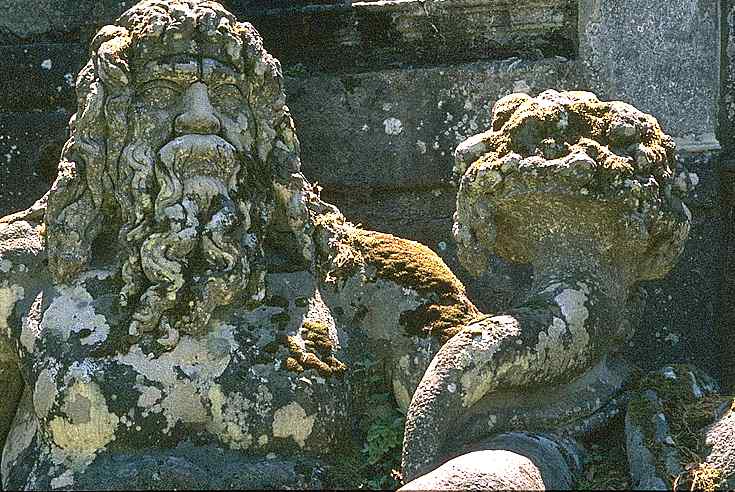
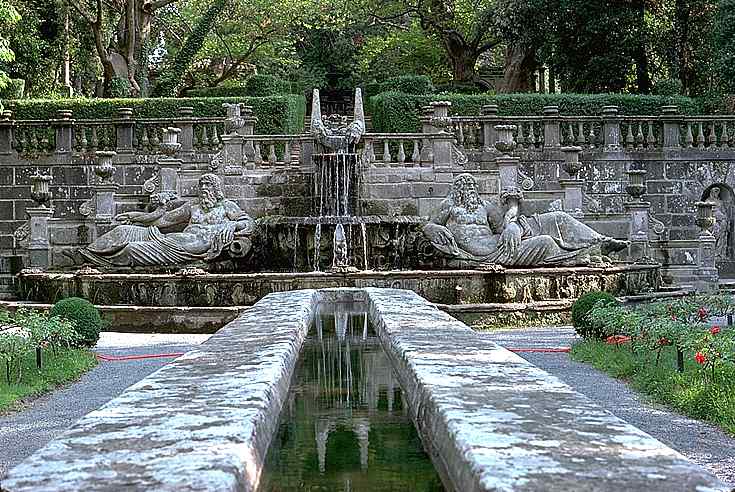
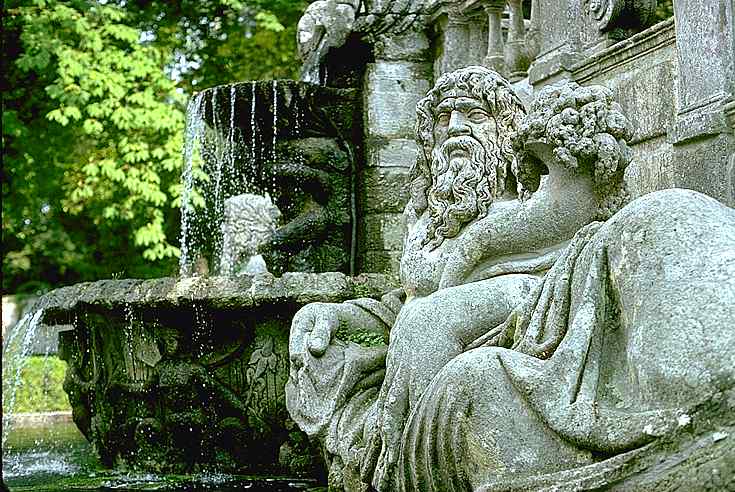
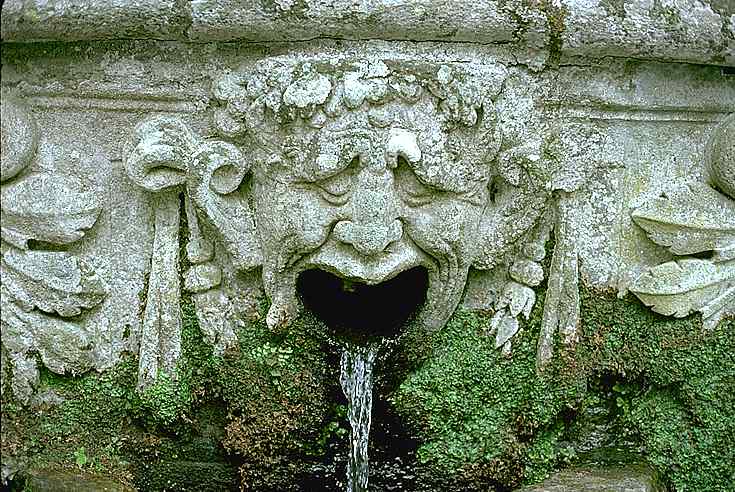
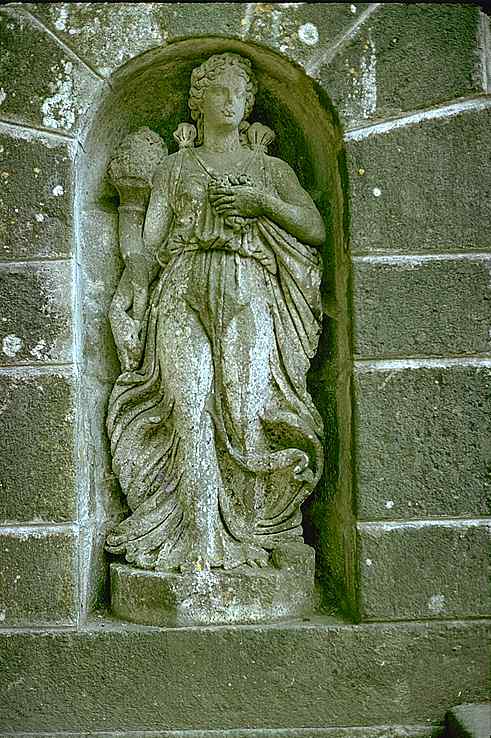
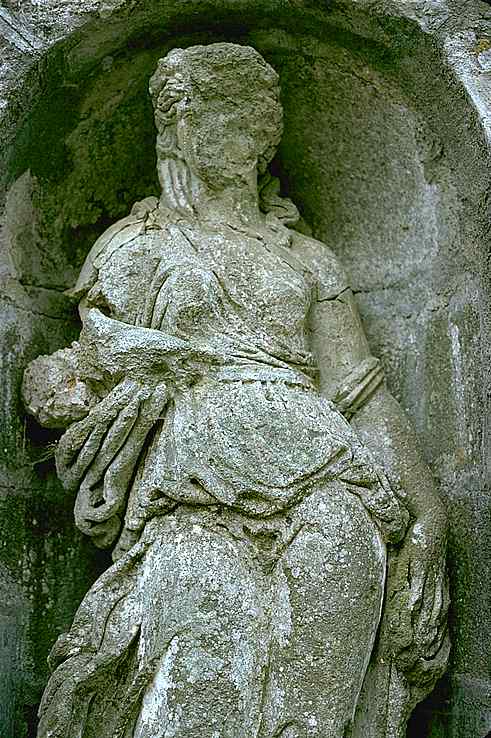
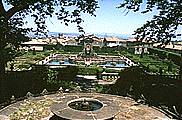
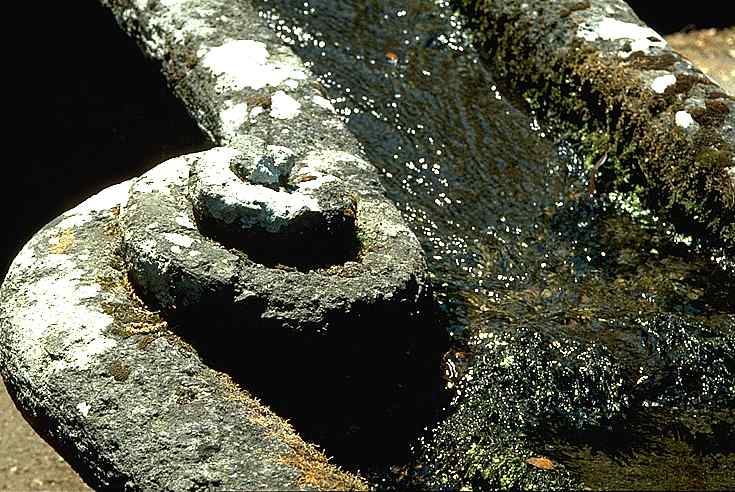
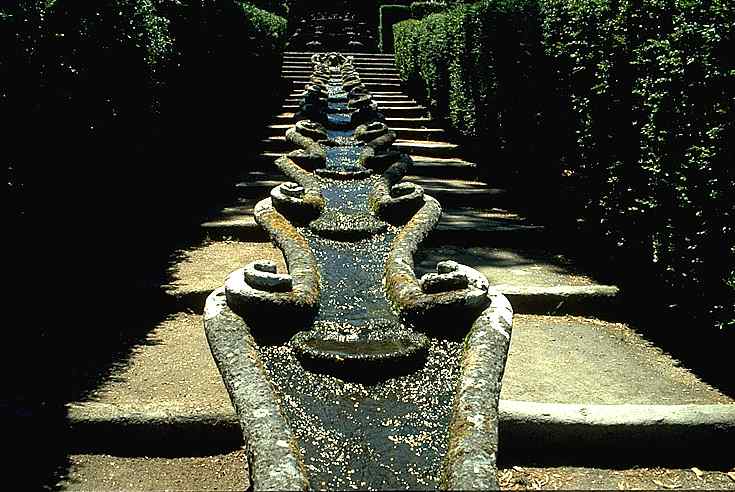
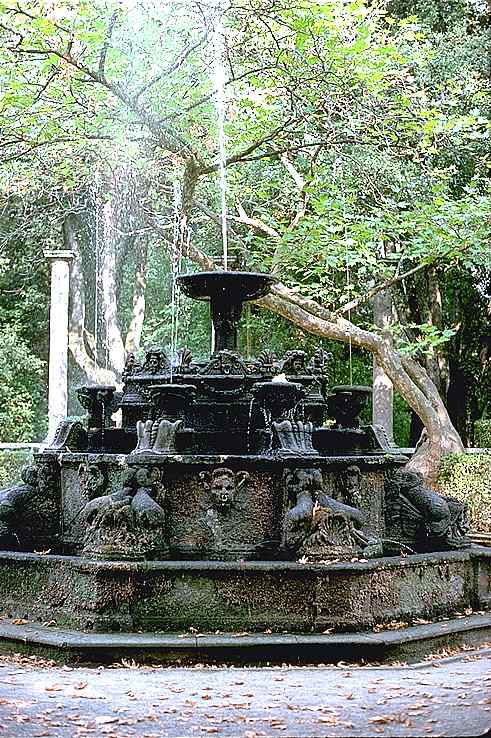
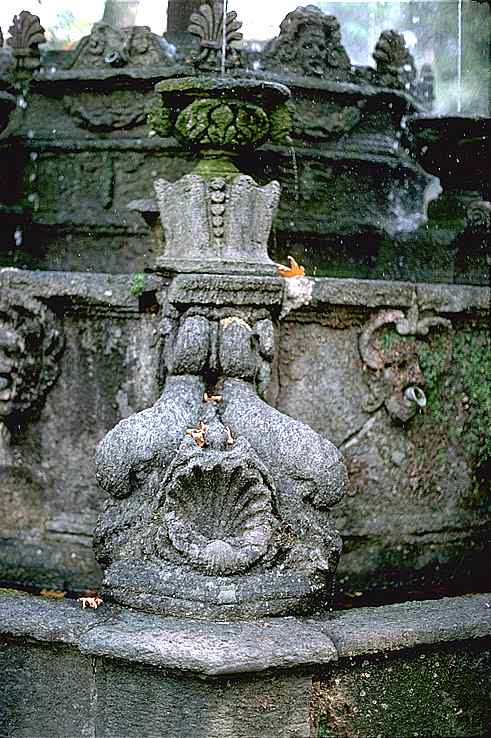
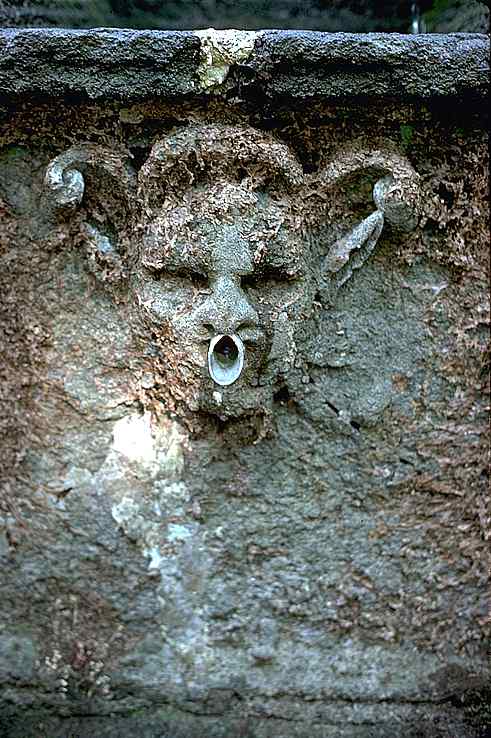
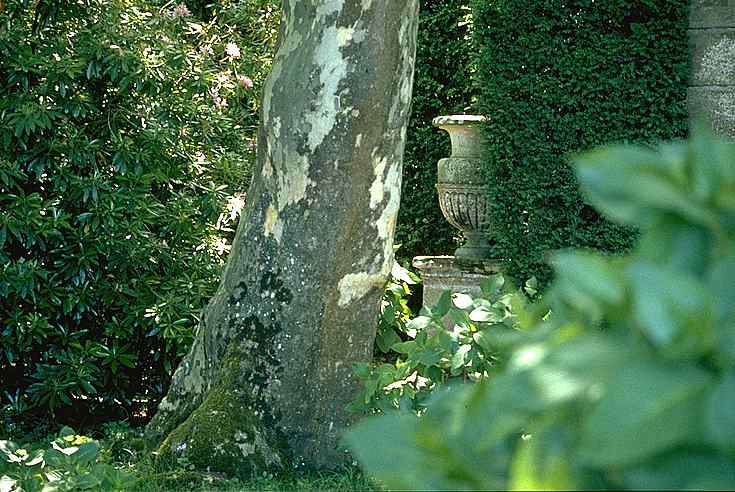
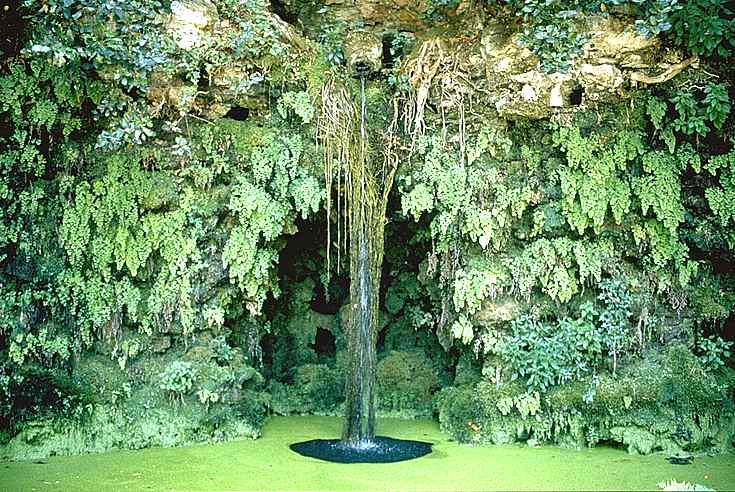
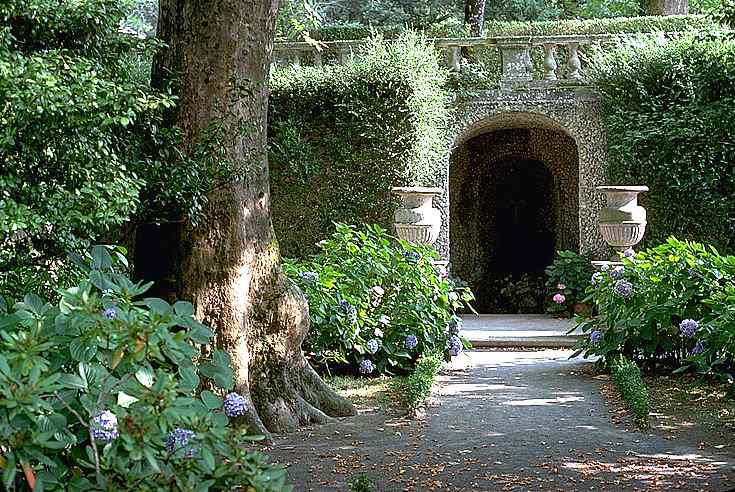
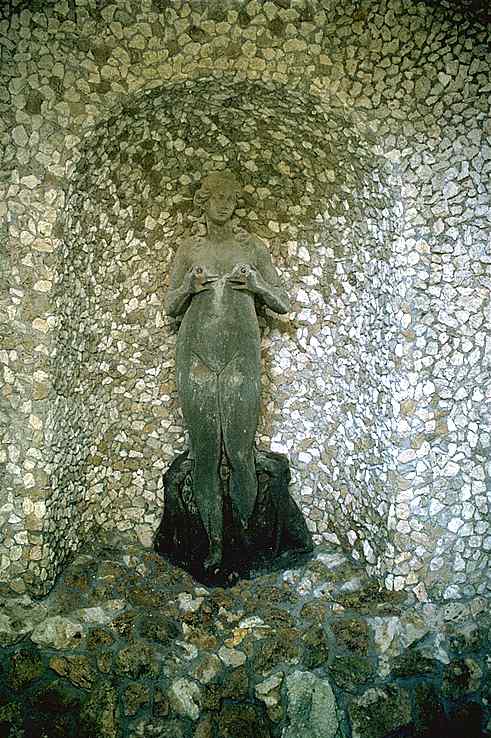
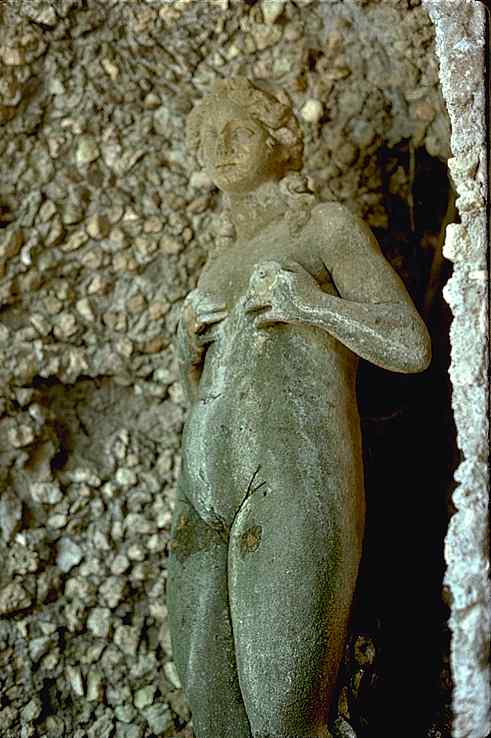
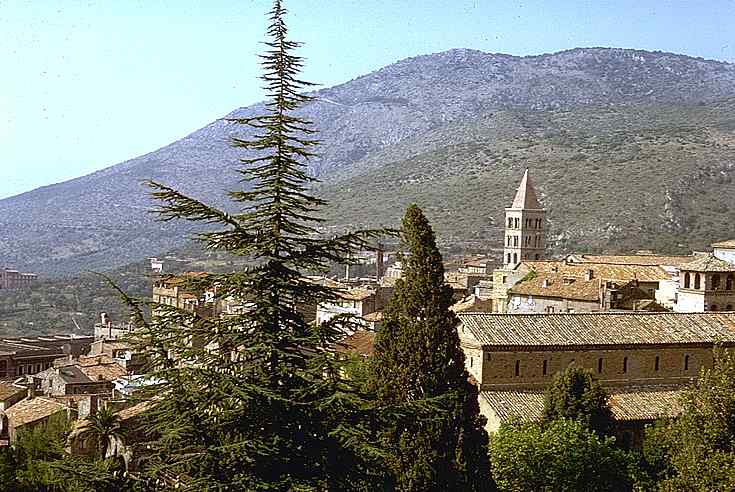
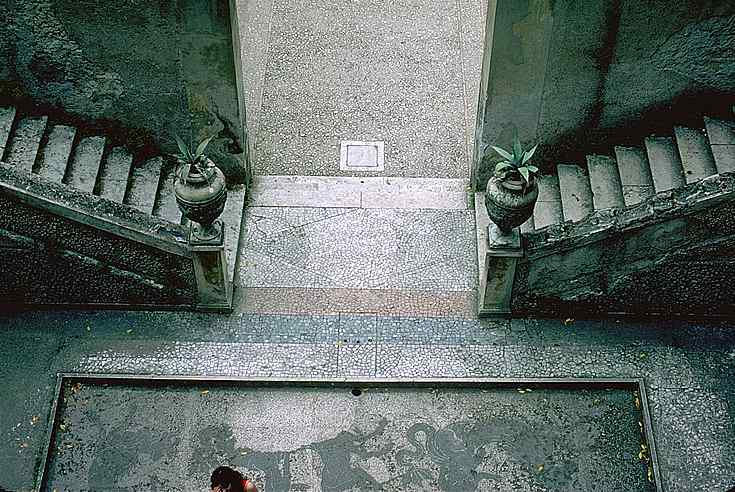
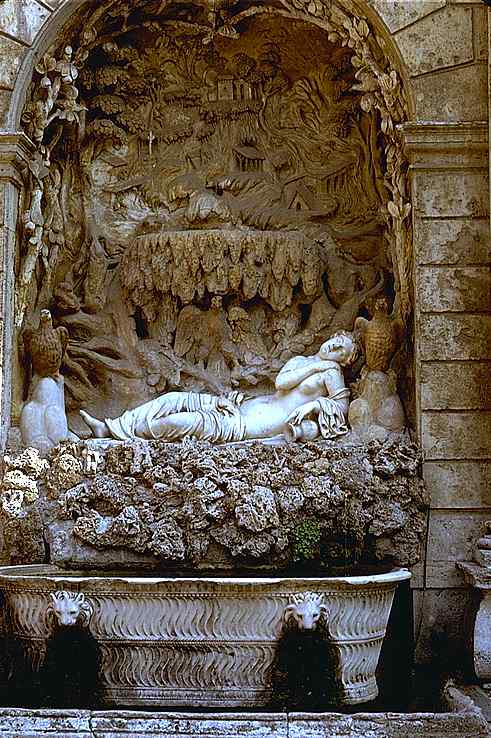
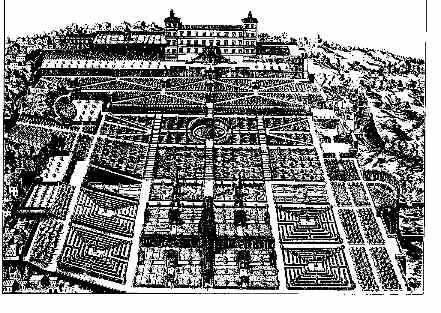
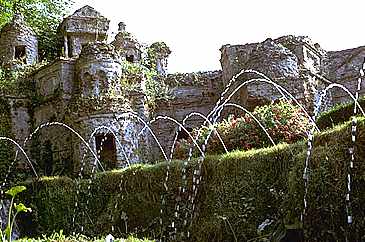
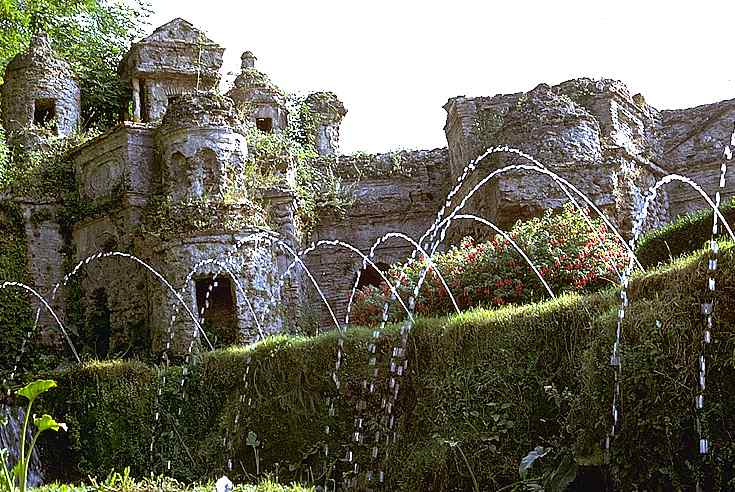
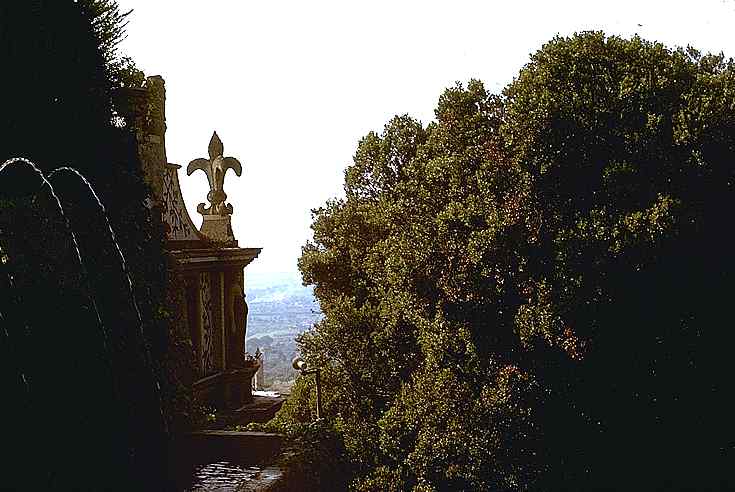
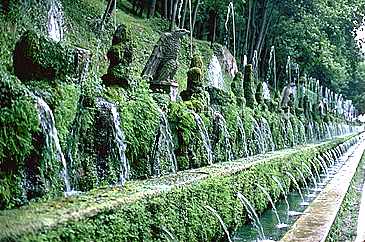
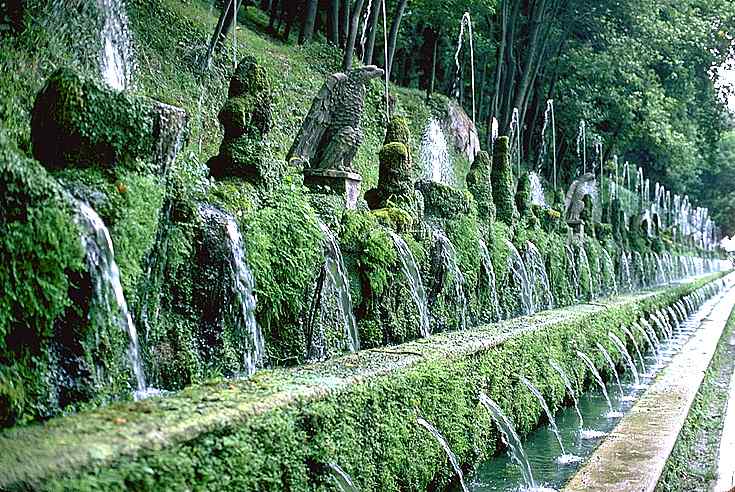
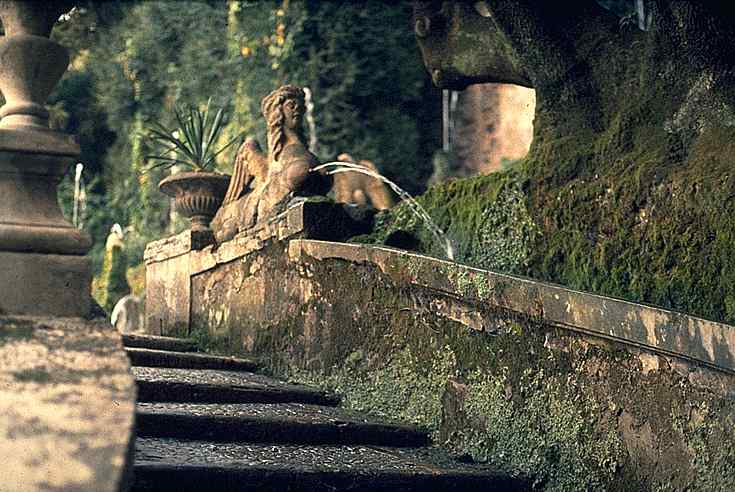
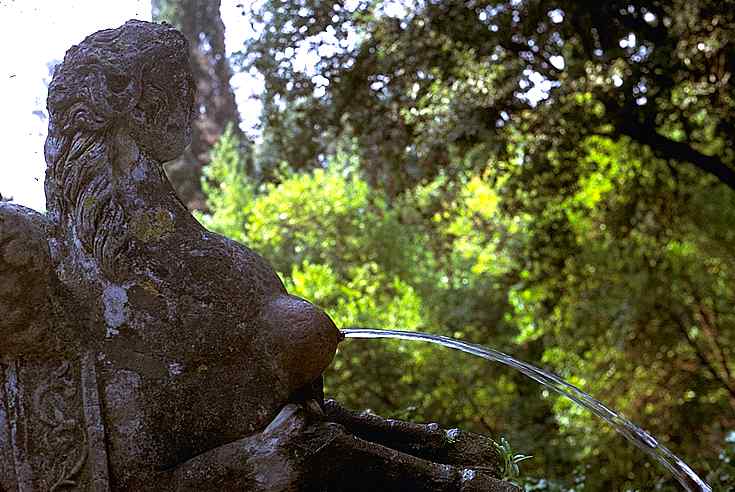
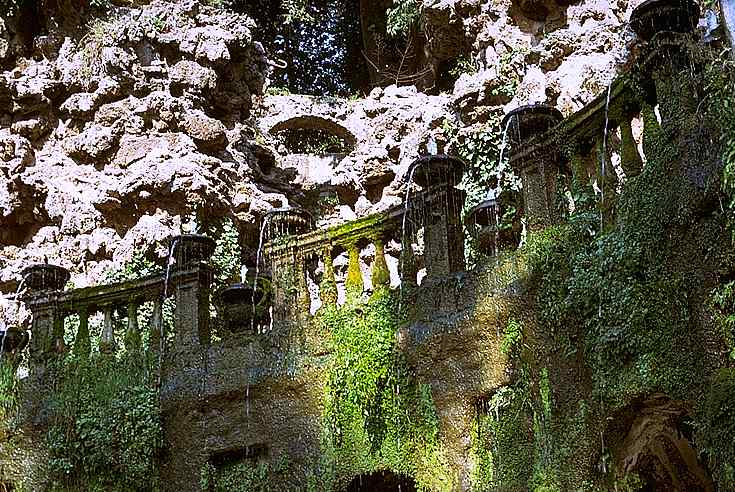
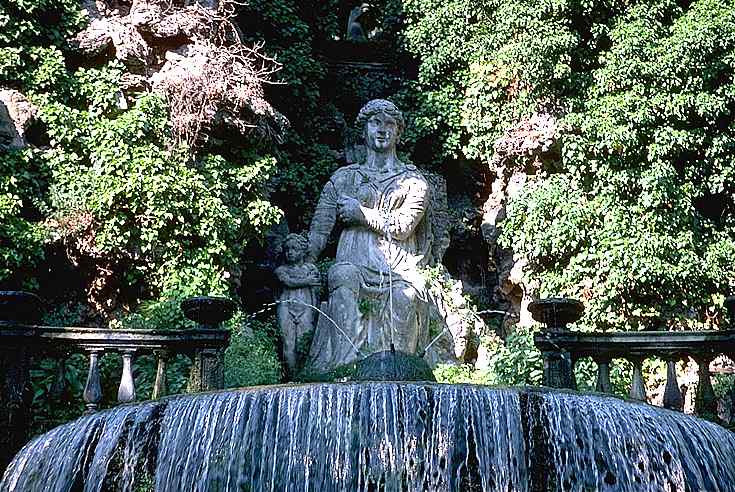
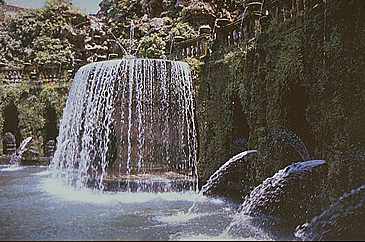
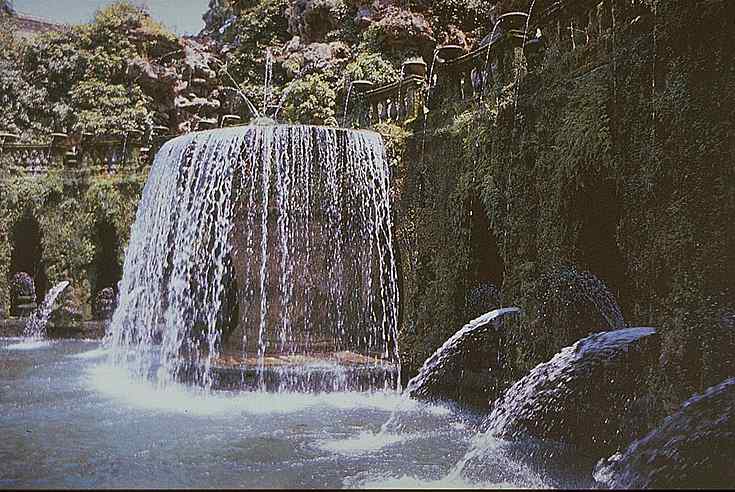
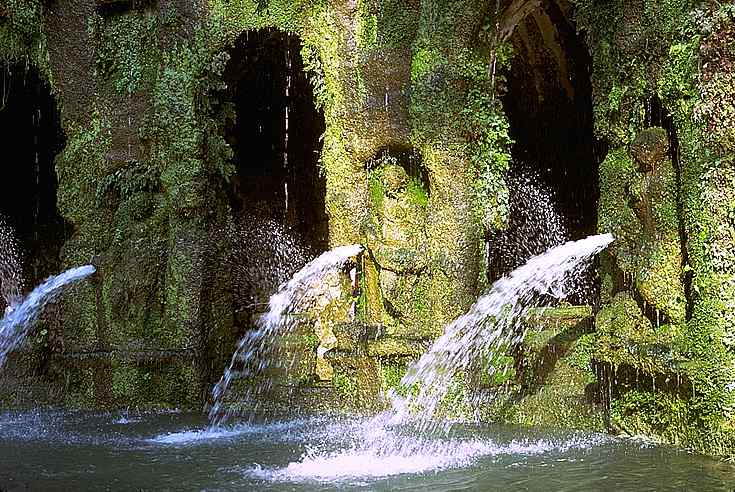
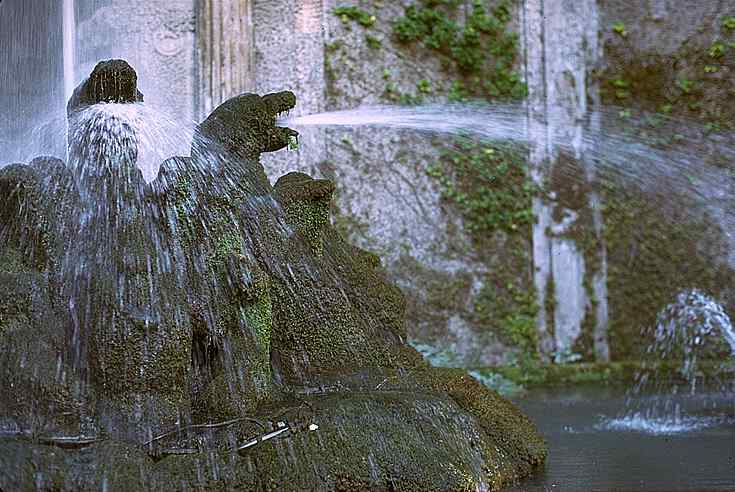
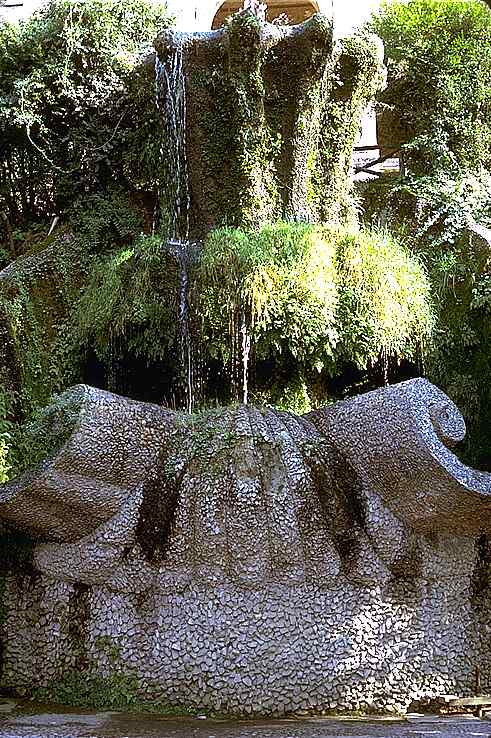
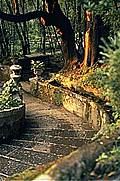
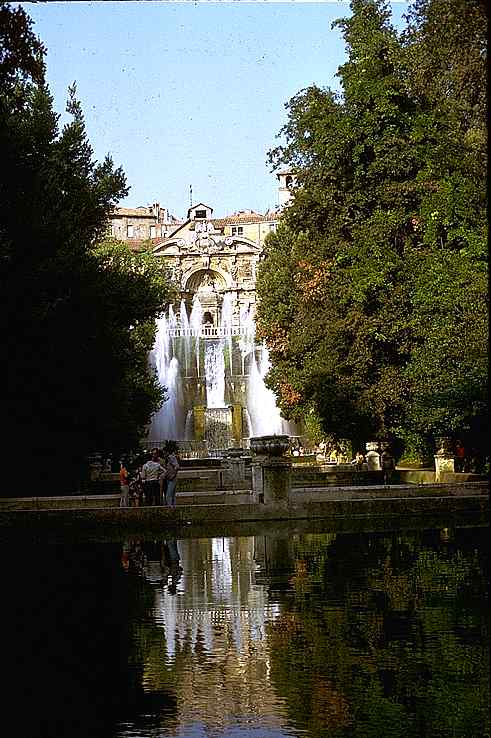
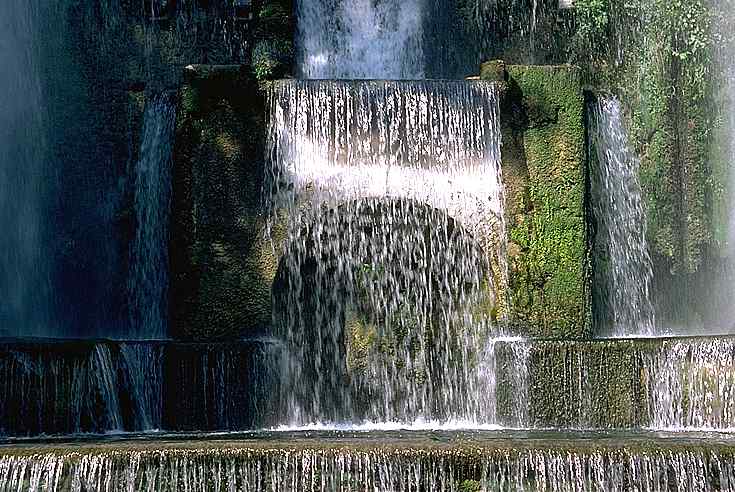
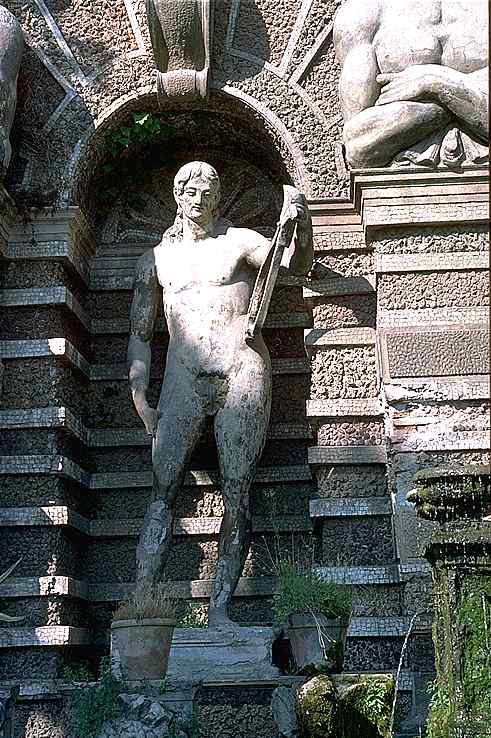
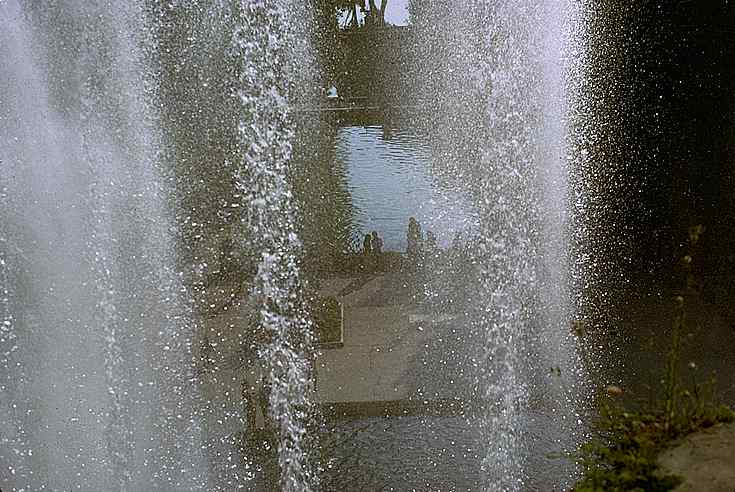
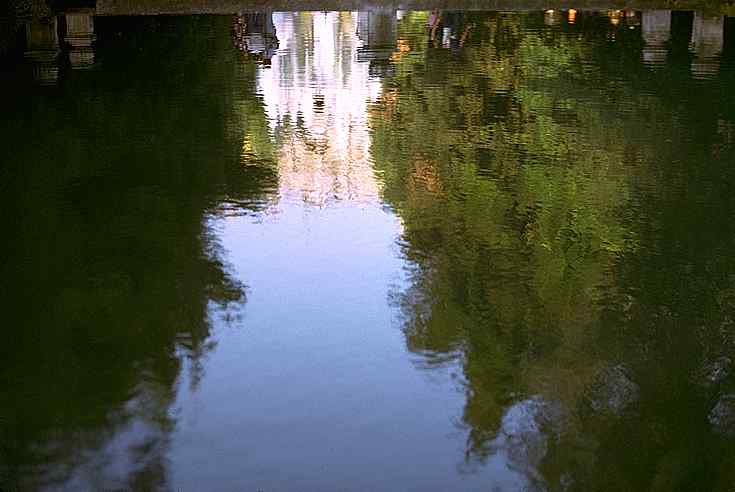
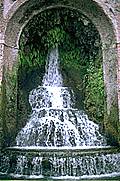
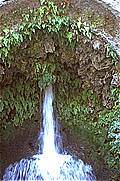
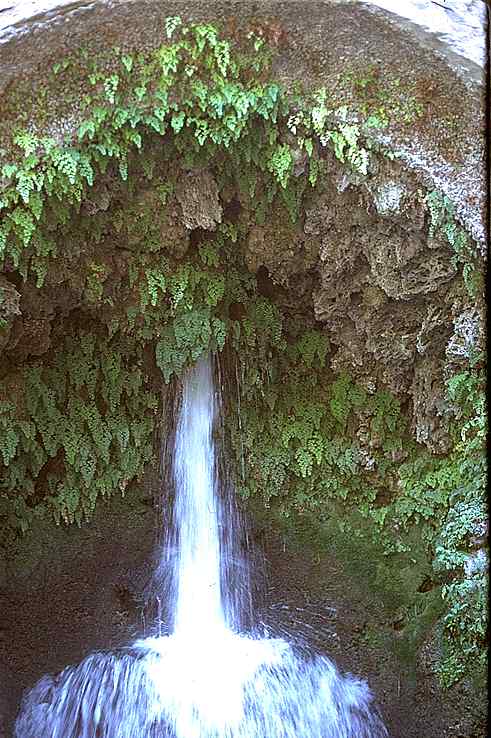
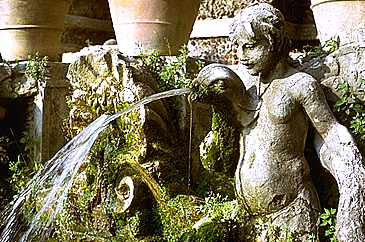
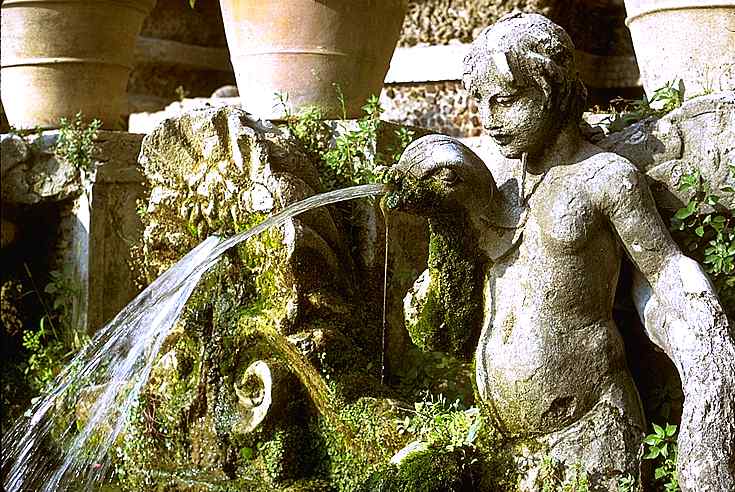
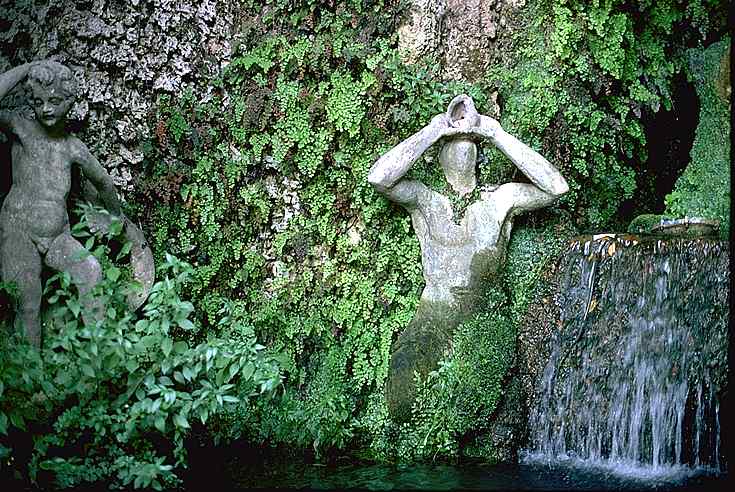
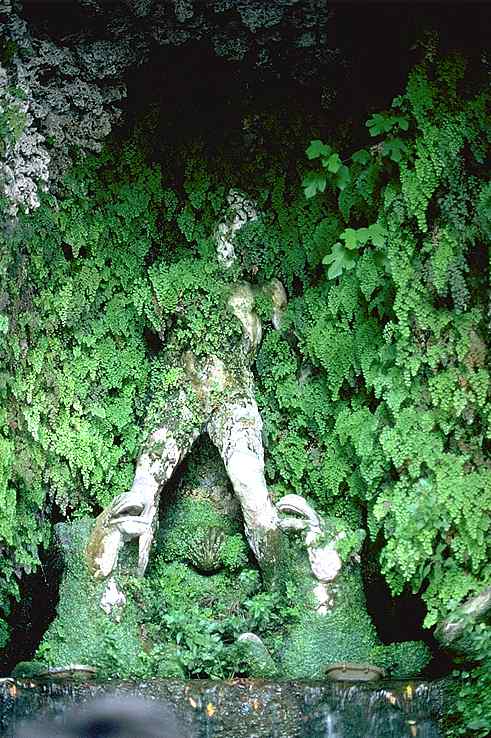
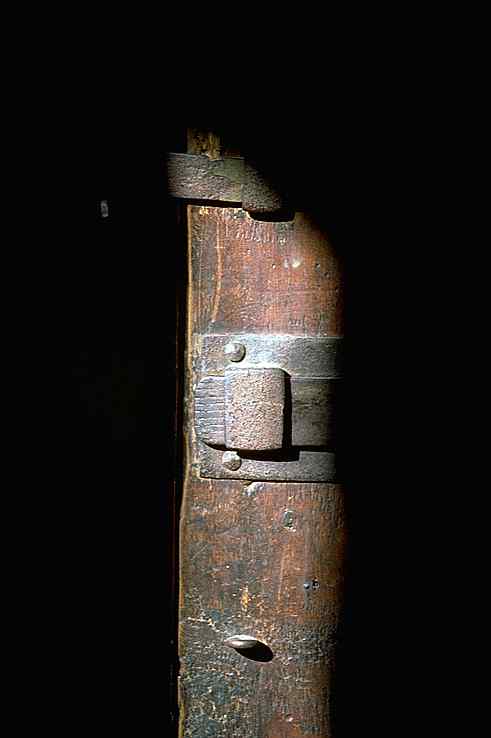
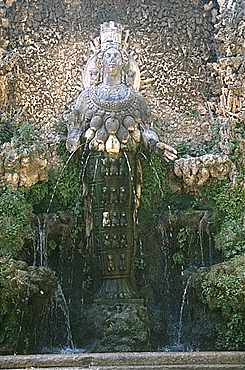
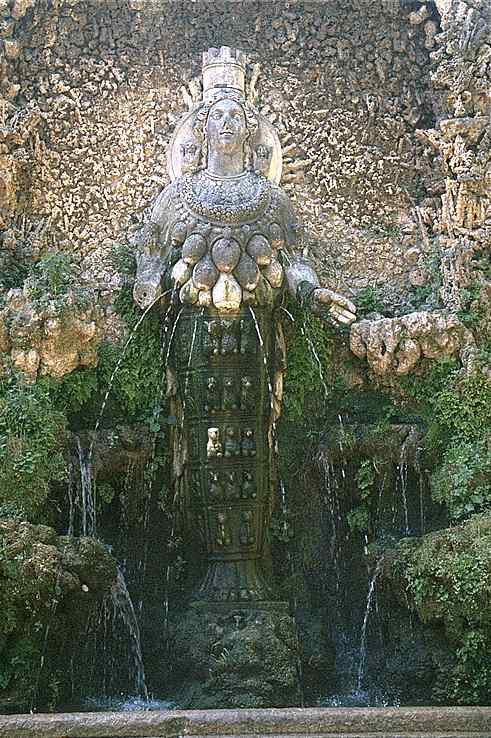
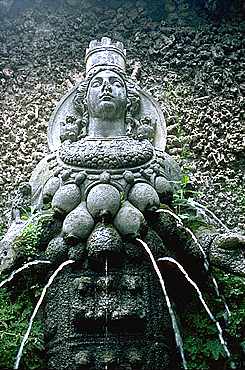
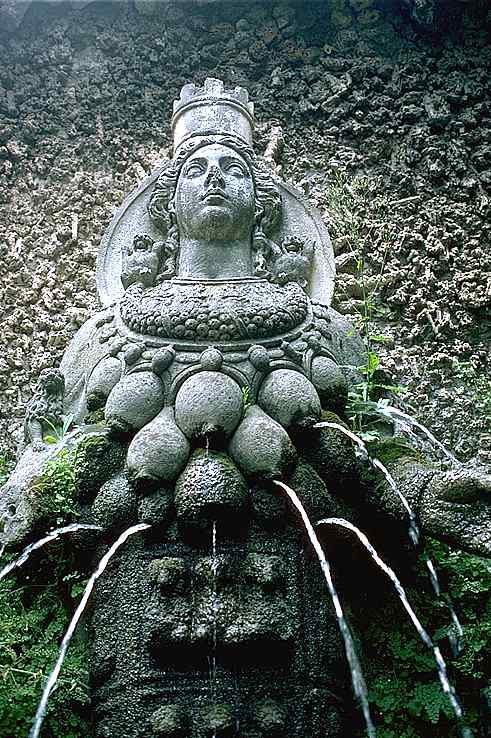
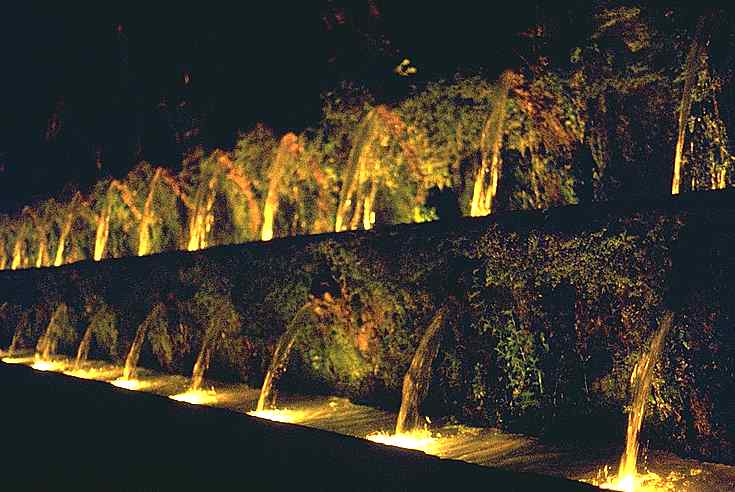
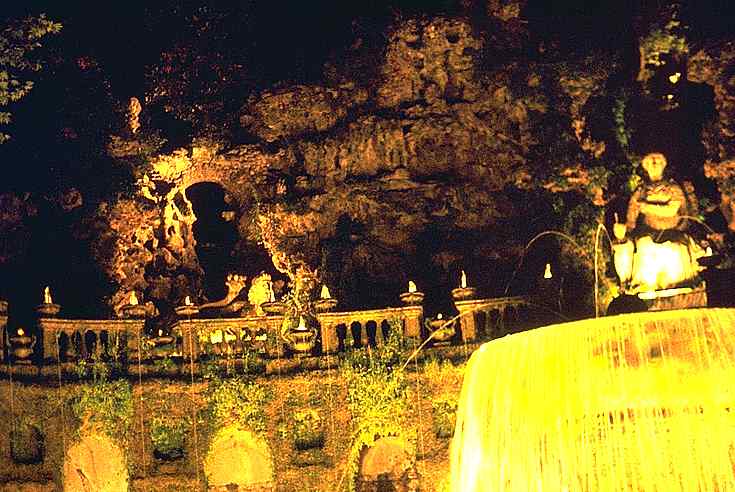
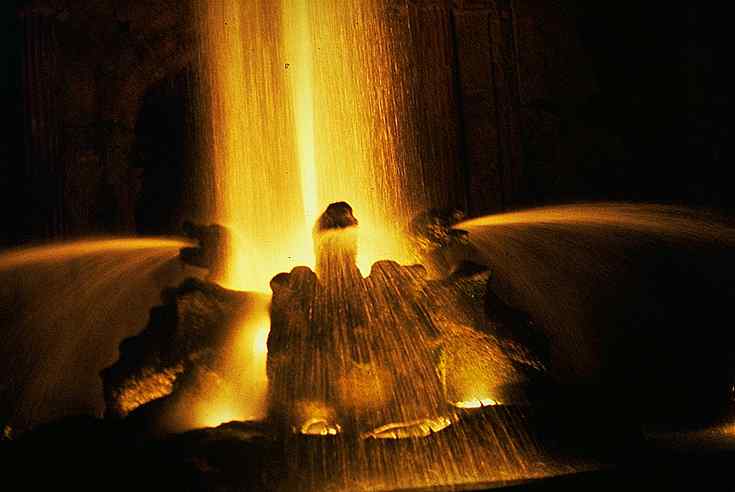
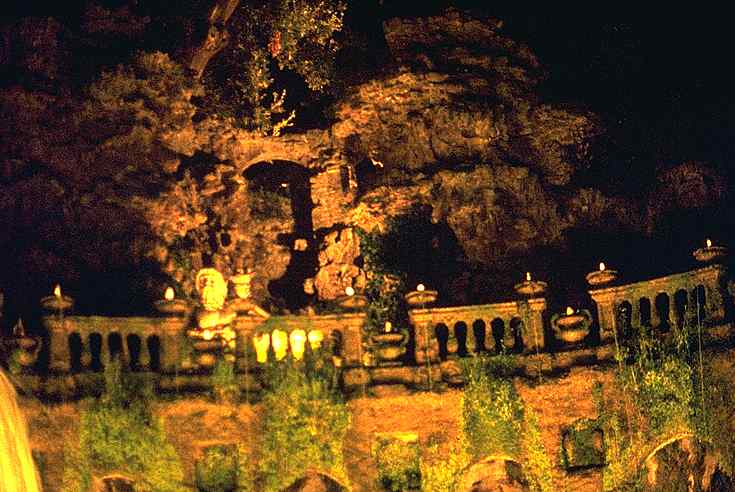
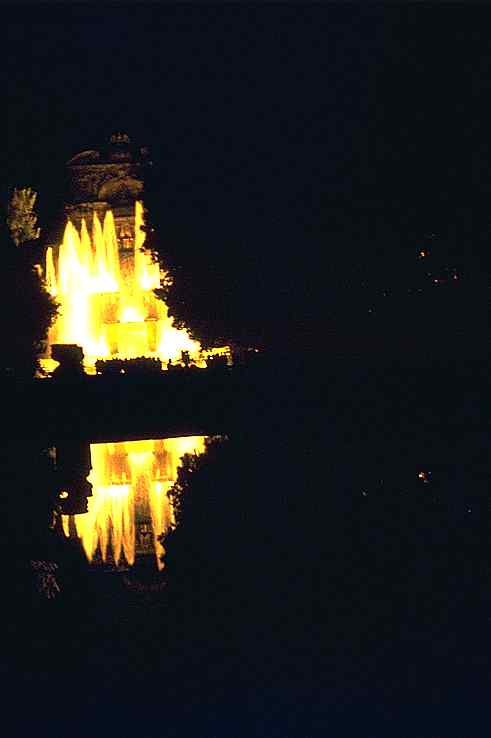
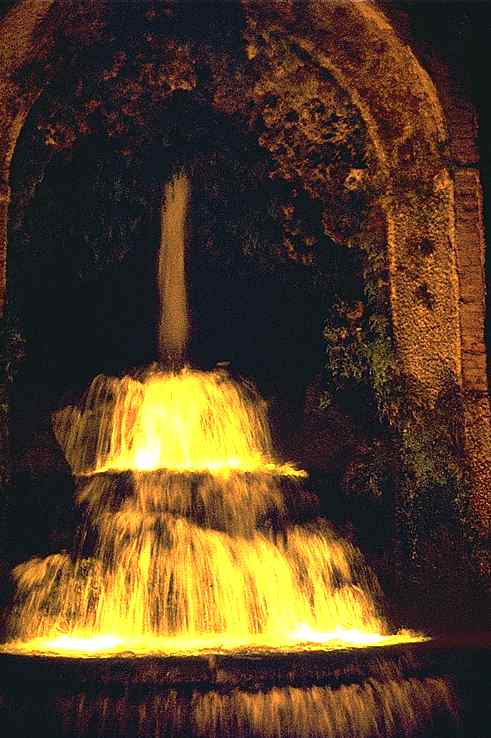
La Villa d'Este a été commanditée et exécutée par le cardinal Hippolyte d'Este. Né en 1509, il est un homme du 16e siècle de la génération maniériste. Son origine est maniériste déjà : il est le fils de Lucrèce Borgia et petit fils du pape Alexandre VI. Nous pouvons parler d'expressionnisme maniériste. Il est le seul cardinal a pouvoir dire qu'il est petit-fils de pape. Il paraît qu'il ne manquait pas de le dire. Alexandre VI avait eu pour fille Lucrèce. Il l'avait mariée à Alphonse Ier duc de Ferrare. Hippolyte est le fils de Lucrèce et d'Alphonse Ier. Hippolyte d'Este est évêque à l'âge de deux ans, archevêque à l'âge de dix ans, cardinal à trente ans. A quarante et un ans, il frôle la papauté.Carrière fulgurante. Le trône pontifical lui échappe au profit de Jules III. Il y avait une rivalité effroyable entre Jules III et Hippolyte. Le succès de l'un a amené l'exil de l'autre. Jules III a fait immédiatement chasser Hippolyte d'Este en le nommant gouverneur de Tivoli. Ce qui était d'une habileté extraordinaire : un gouverneur n'a pas le droit de quitter la province qu'il gouverne. Il l'a donc emprisonné à Tivoli. C'est là que le cardinal passe les vingt dernières années de sa vie. De 1550 à sa mort, en 1572, un des hommes les plus cultivés, des plus érudits, des plus intelligents et des plus déconcertants d'Europe créera son monde de rêve: le plus fabuleux jardin maniériste qui soit. Le jardin de la Villa d'Este. D'excellents artistes ont travaillé à la Villa d'Este. Pirro Ligorio a oeuvré aux côtés d'Hippolyte pendant 17 ans Thomaso Chiruchi, le meilleur hydraulicien du 16e siècle. Claude Venard, un Bourguignon, le plus extraordinaire fabricant d'orgues hydrauliques du monde. Trois très bons peintres, Federico Zuccaro, Livio Agresti, Girolaio Luchiano. Nous sommes à Tivoli, tout près de Rome. Le paysage est admirable. Au centre du bourg de Tivoli, se dresse une modeste villa, petite austère, dont la cour d'honneur est simplement pavée de pierres de couleurs noires, blanches et rouges et une petite fausse grotte, discrète, une Ariane endormie.....